Adventure to Denmark, Norway and Sweden was short but oh so sweet

0

Our 12-day Handy Dandy Scandi Tour of Denmark, Norway and Sweden began on Sept 10. It kicked off in Copenhagen and ended in Stockholm. We also visited the Norwegian cities of Bergen and Oslo. 

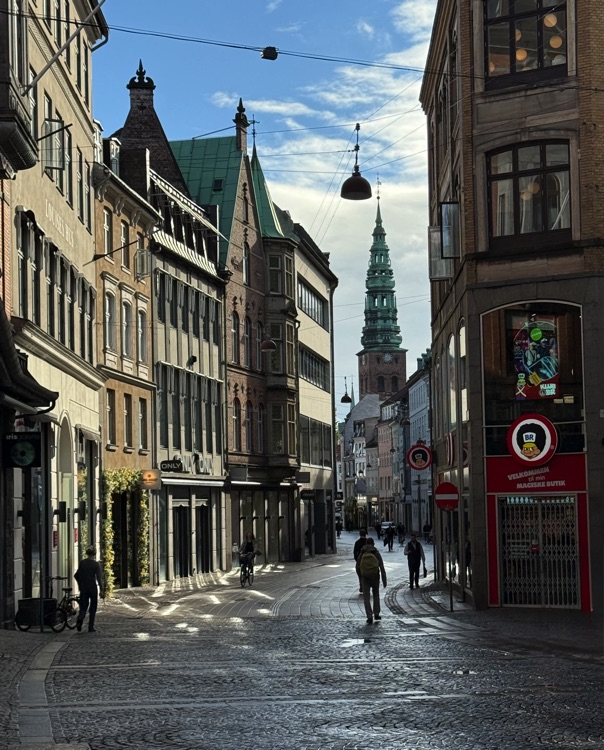
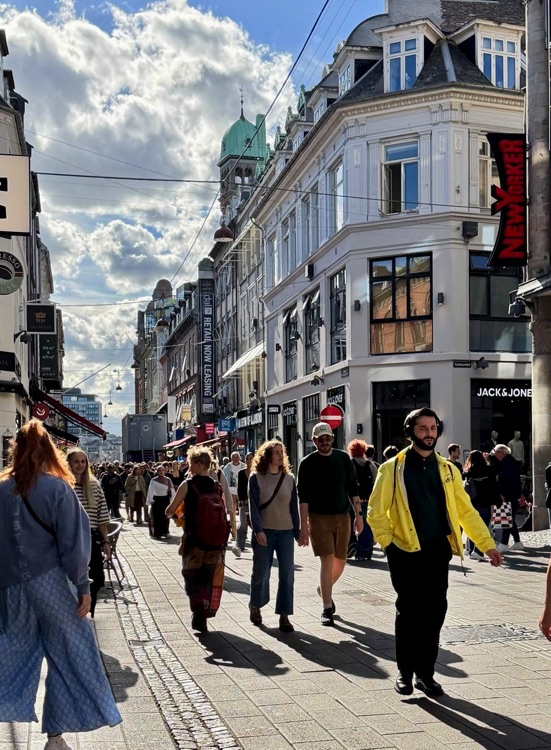
Early morning on Stroget in Copenhagen
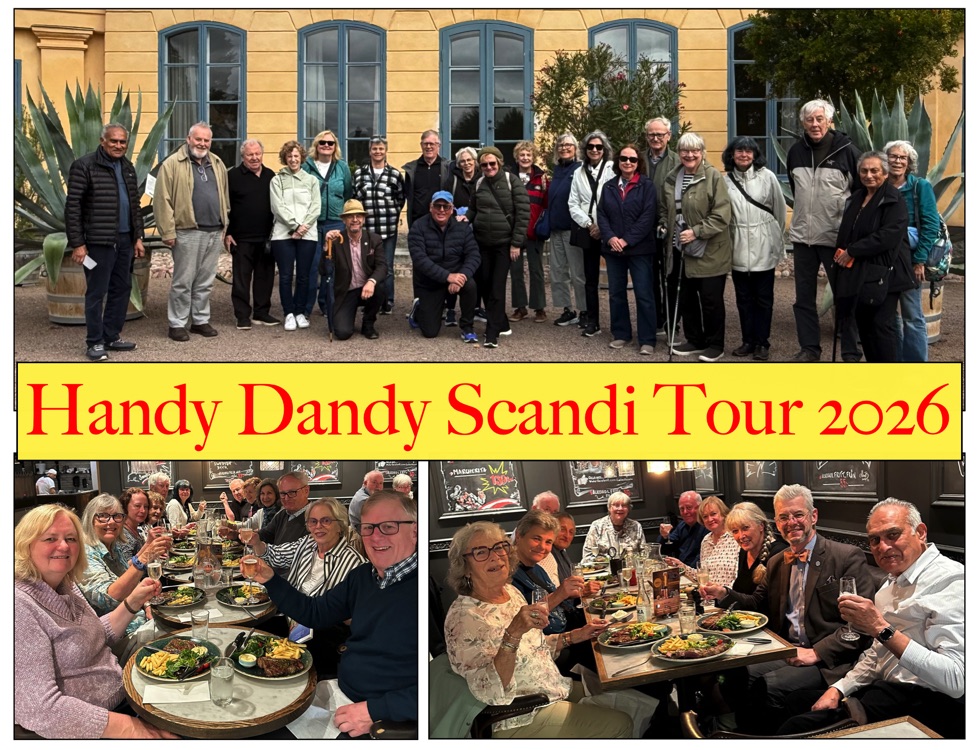
This was the 35th tour since we started doing group travel adventures in 2009. Twenty-two people signed on for the tour. Most travelled to Copenhagen two days in advance of the official start on Sept.10.

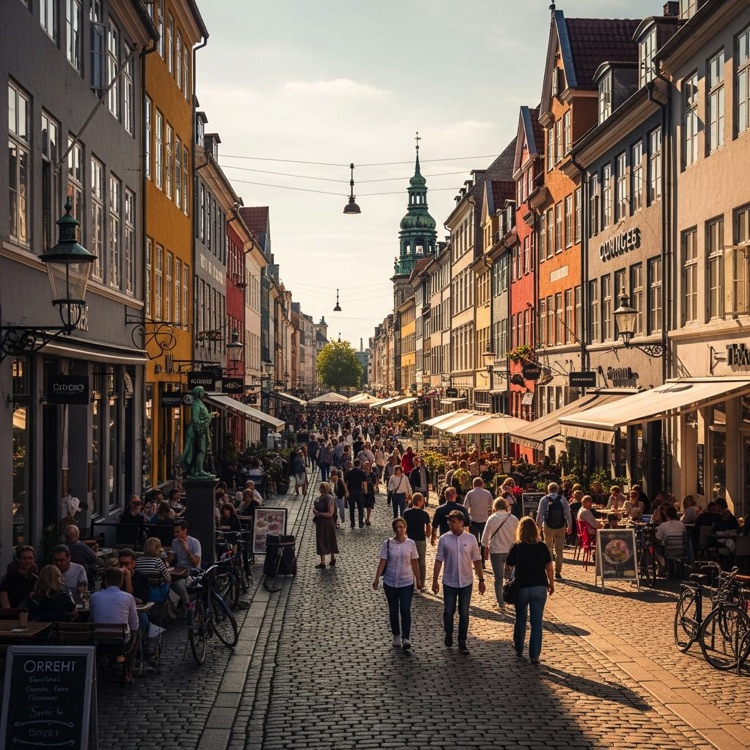
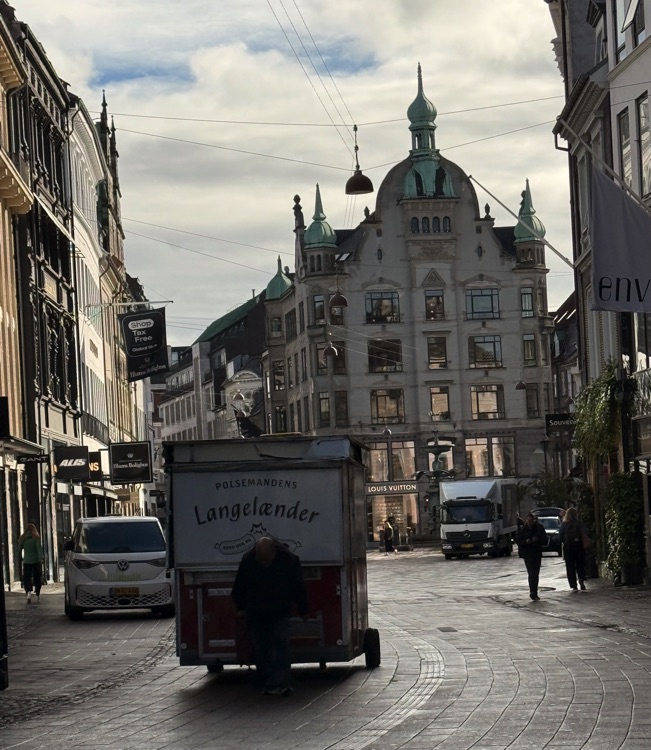
In Copenhagen, we quickly discovered the bustling pedestrian shopping district, Stroget, supposedly one of the longest and oldest shopping streets in Europe, stretching over a kilometre, with chic, high-end stores as well as an abundance of gift shops, cafes and restaurants. 
Pretty cobble stone street in Copenhagen

We also wandered along Vestergade, Frederikseberggade and Studiestraede where we found some delightful cobbled streets full of inviting shops, bars and cafes.

Some of our group explored the famous Round Tower while others spent their advance days in the Danish capital by visiting museums and art galleries and exploring the streets around the Christiansborg Palace.

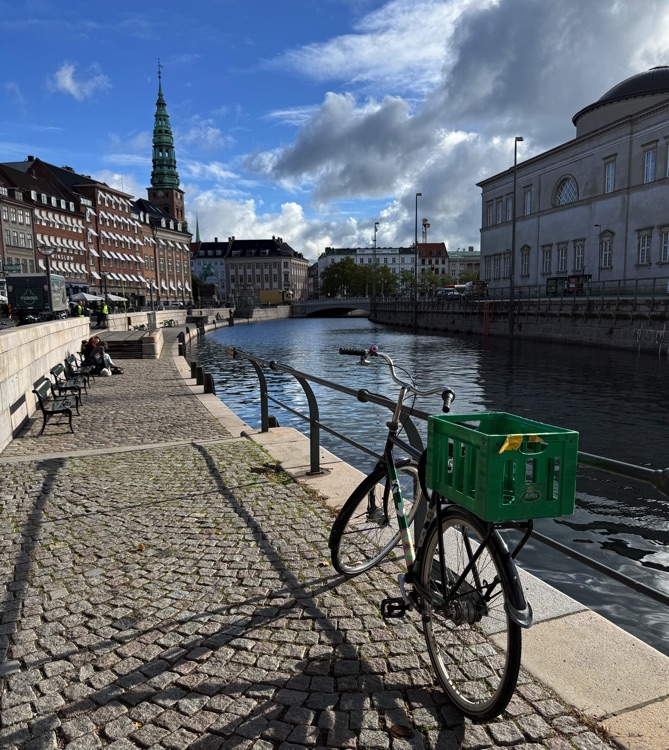
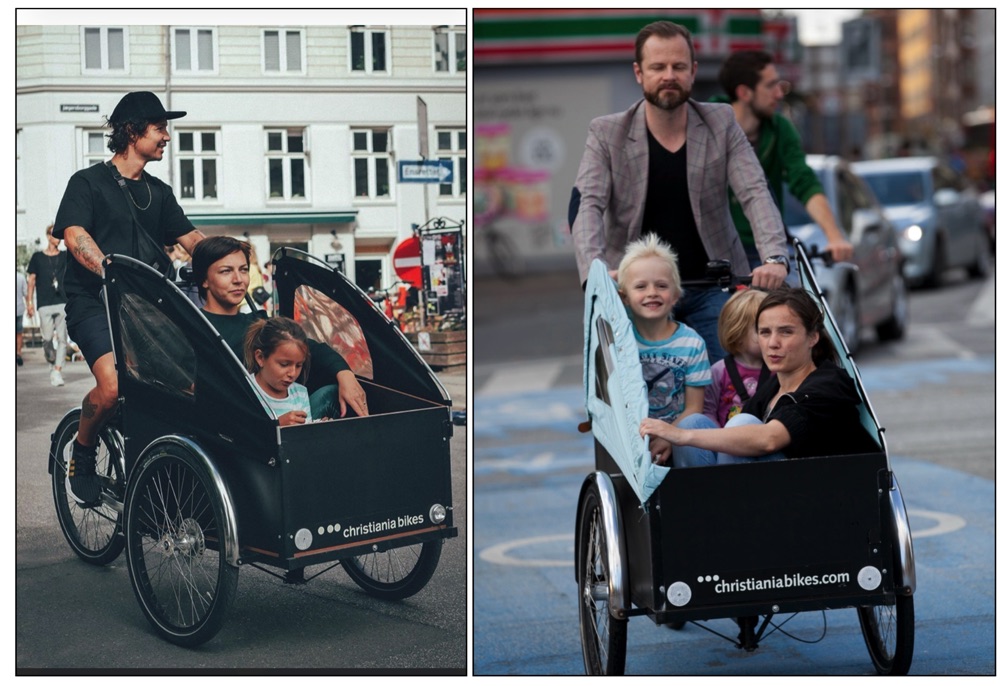
Bicycles are a key part of the culture scene in Copenhagen

It was immediately obvious to us that the residents of Copenhagen love to bike everywhere. Bike lanes are prominent and we were advised right from the start not to make the mistake of stepping into the “killer bike” lanes without looking.

In reality, we found cyclists in Copenhagen  very thoughtful and forgiving. It was amusing and impressive to see children, sometimes four at a time, being chauffeured around in compartments fixed to the front of a bike. 

Best to stay out of the bike lanes but the pedestrian areas are safe.

On one occasion, I spotted a father peddling his entire family around the city square – two kids in the front, one at the back and his wife seated behind. It was a Saturday night and the family were obviously getting around without the cost of an Uber ride. 

Copenhagen is built on a mostly flat, hill-less landscape which makes it perfect for bike riding, but we also saw many elderly people cycling and we definitely got the impression that this was a significant way of keeping healthy and active.

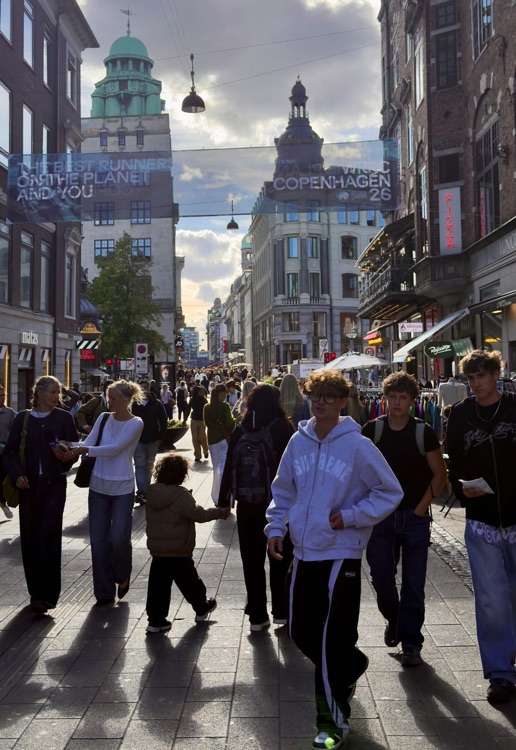
Copenhagen's city streets are well-cared for and have an upbeat vibe

It was reasonable to compare Copenhagen – and, later on, the other Scandinavrian capitals of Oslo and Stockholm – with Vancouver.

Copenhagan has population of around 700,000 (city), 1.4 m (urban area) and 2.5 m (broader urban region).

Oslo has a population of 729,000 in the city, 1.1 m in the urban zone and 1.5 m in the greater urban region.

Stockholm has a city population of 1 m, 1.6 to 1.75 m in urban area and 2.5 m in large metropolitan area. 

Copenhagen's streets are safe, clean and there is no sense of menace.

Stockholm is bigger than Copenhagen by both population and land area.

We found all three cities modern, quiet, safe and very well cared for with sensible, wide sidewalks, many of them pedestrianized, admirable traffic management, exciting and impressive new infrastructure. All the cities had very few high-rises.

What we did not see in any of these cities were poor, sick, mentally-ill and drug-addicted people living on the street in filth and hopelessness, something we see all the time when in downtown Vancouver. 

On the contray, the Scandi cities were vibrant, bustling, even joyful places, full of well-dressed, educated and considerate people with an ability to switch from their native language into perfect English at the drop of a hat. We learned that higher education is free and students often even get an allowance to continue with their studies.

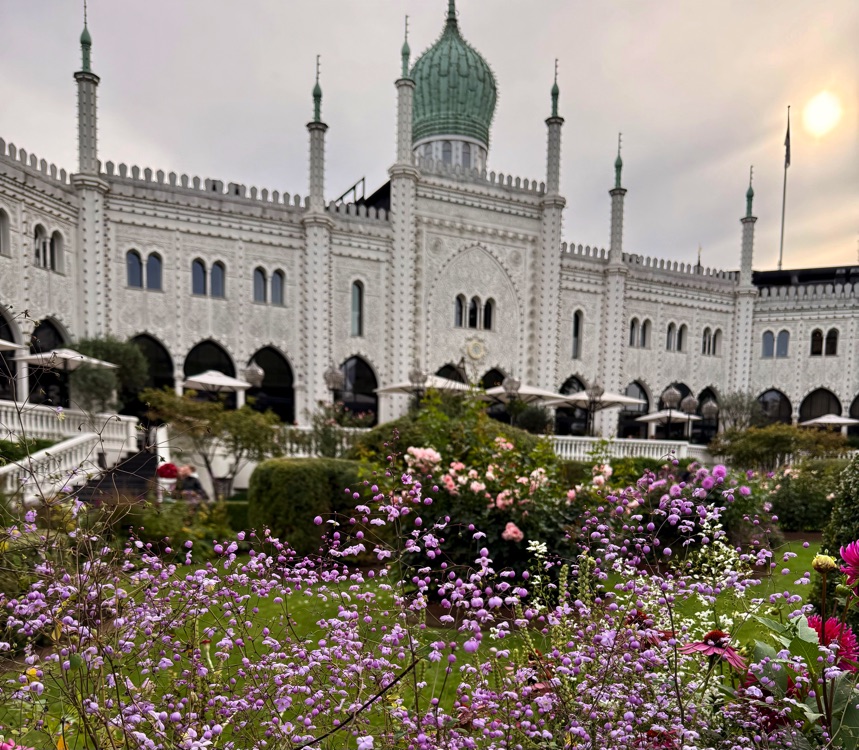
Tivoli Garden is a remarkable attraction the heart of Copenhagen

On Sept 10, my group all gathered at the Hereford Beefstouw, a well-known steakhouse chain in Denmark, for our welcome dinner. The dining room was in a conservatory with views of lush perimeter landscaping inside the famous Tivoli Garden, which we visited at length later.

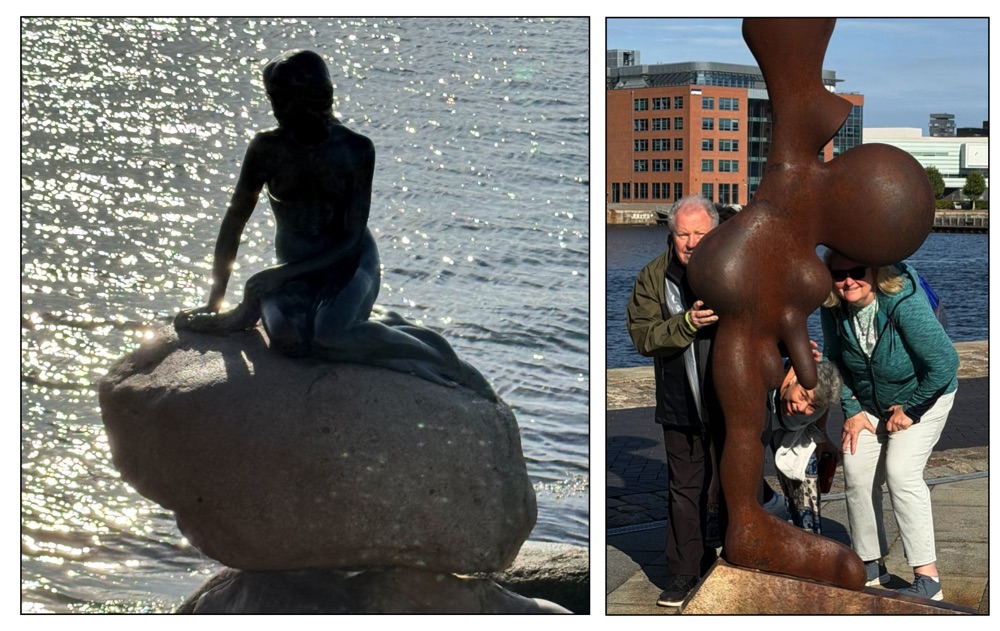
Iconic Little Mermaid statue and fun new abstract sculpture

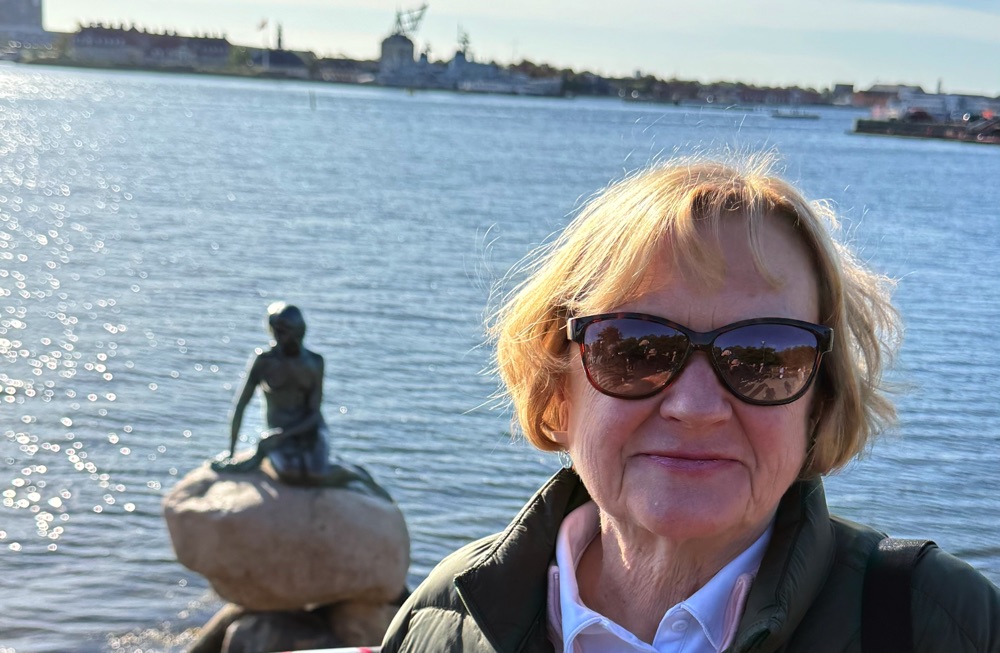
Our tour officially got underway the next morning with a city bus/walking tour. We started out by going to see the Little Mermaid statue, the iconic symbol of Copenhagen on the waterfront.

From there, we wandered along the waterside into a very pleasant, landscaped area where we found stylish, new and striking minimalist buildings located next to the almost surreal calmness of a canal-like waterway where we came upon a modern sculptural interpretation of the Little Mermaid and other artistic themes. 

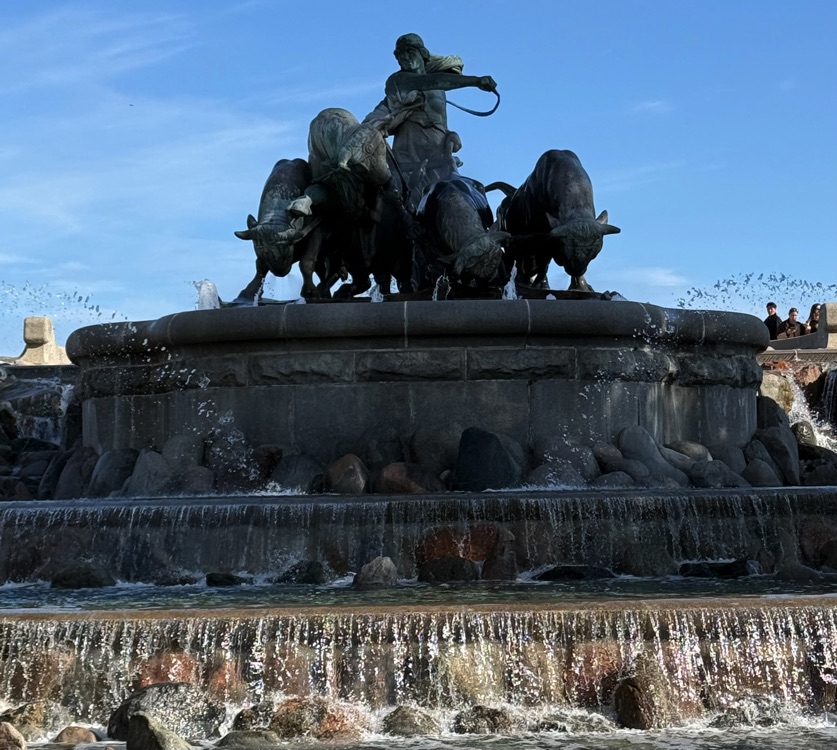
Famous Gefion fountain with goddess driving four bulls
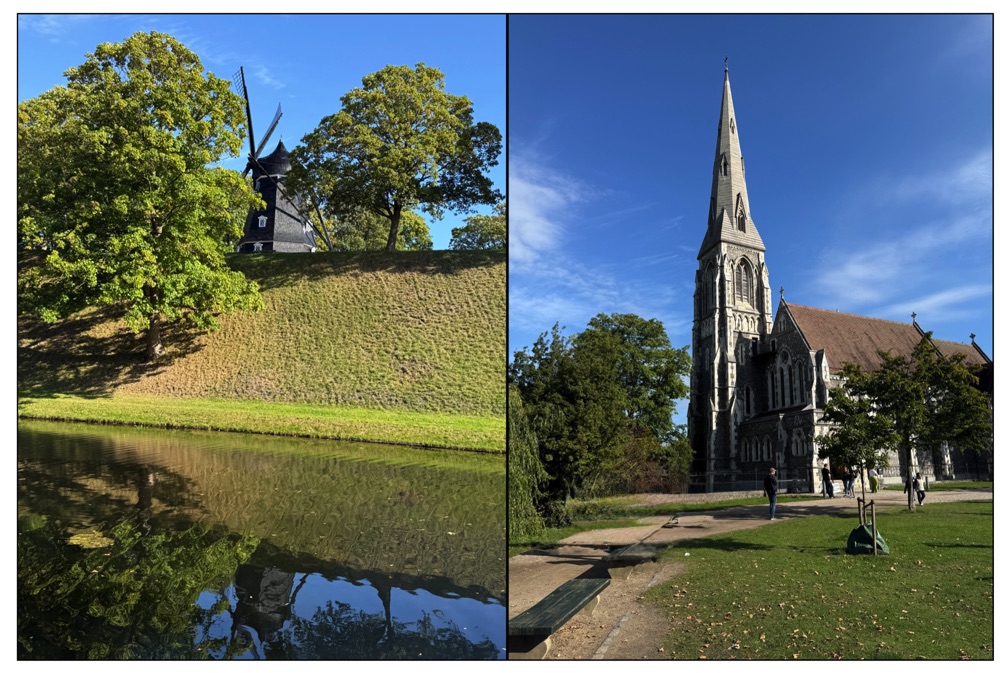
Black windmill (Kastellet Windmill) and St Alban’s Church in Copenhagen.

As the weather was perfect, we strolled at leisure around the woodland garden next to the Amalenborg Palace, the official winter residence of the Danish royal family. On the way, we passed the black windmill (Kastellet Windmill) and we popped into the beautiful St. Alban’s Church.

We soon arrived at the famous Gefion Fountain, featuring the Norse goddess Gefion driving her group of four massive black oxen pulling a plough.

Apparently, the well-known statue symbolizes the creation of the land on which Copenhagen is founded.

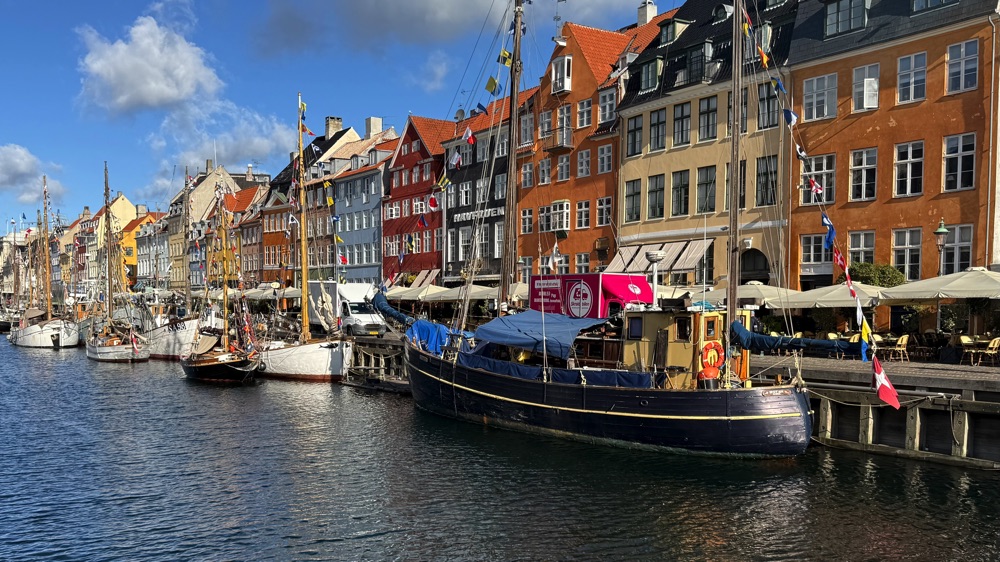
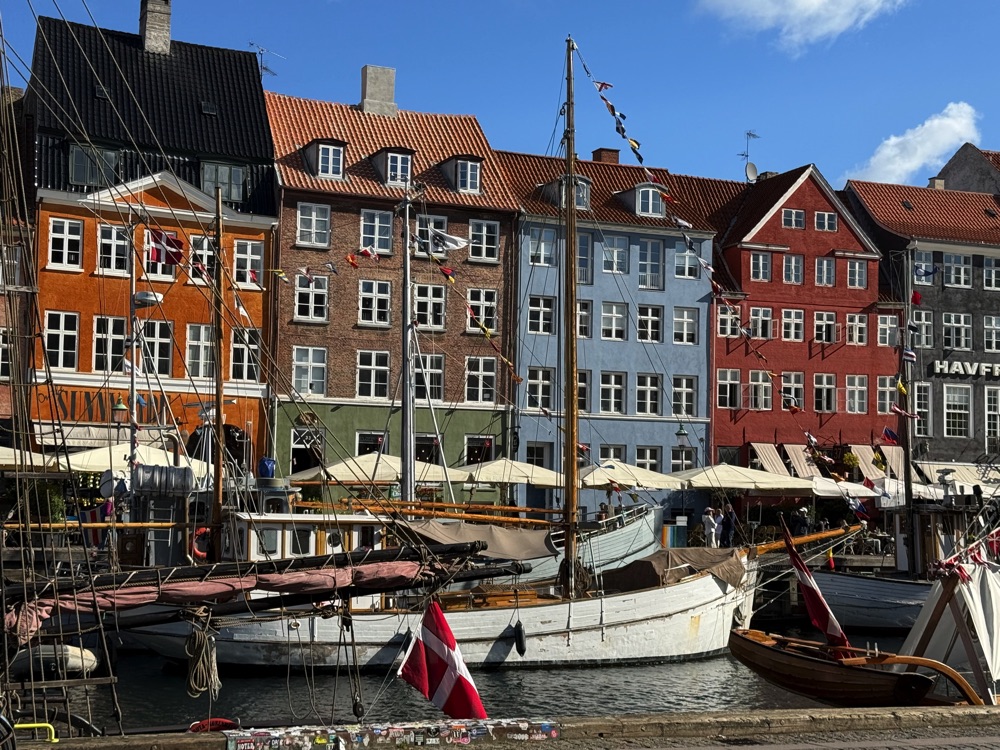
Delightful Nyhavn area of Copenhagen

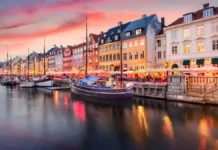
Our next stop was Nyhavn, the famous 17th century waterfront neighbourhood known for its row of colourful houses and wharf of fishing boats and inviting row of lively, open-air cafes and restaurants. This area is still one of the city’s top tourist attractions. It is well-cared for, safe and clean and exudes an upbeat vibe and positive energy. 

Nyhavn is a waterside lined by pretty boats and enticing open-air restaurants

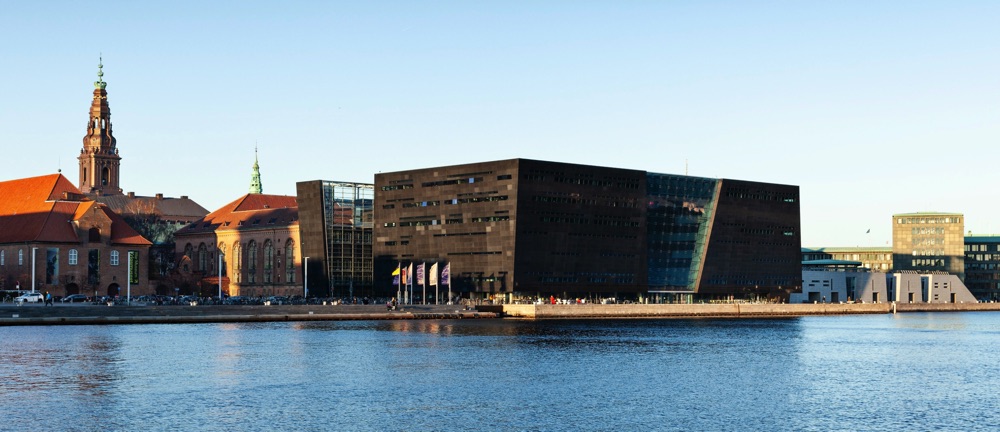
From here, we took a very relaxing cruise around the harbour front where we were able to see the Royal Opera House and the royal palace in the distance and came again very close to the iconic Little Mermaid statue. 

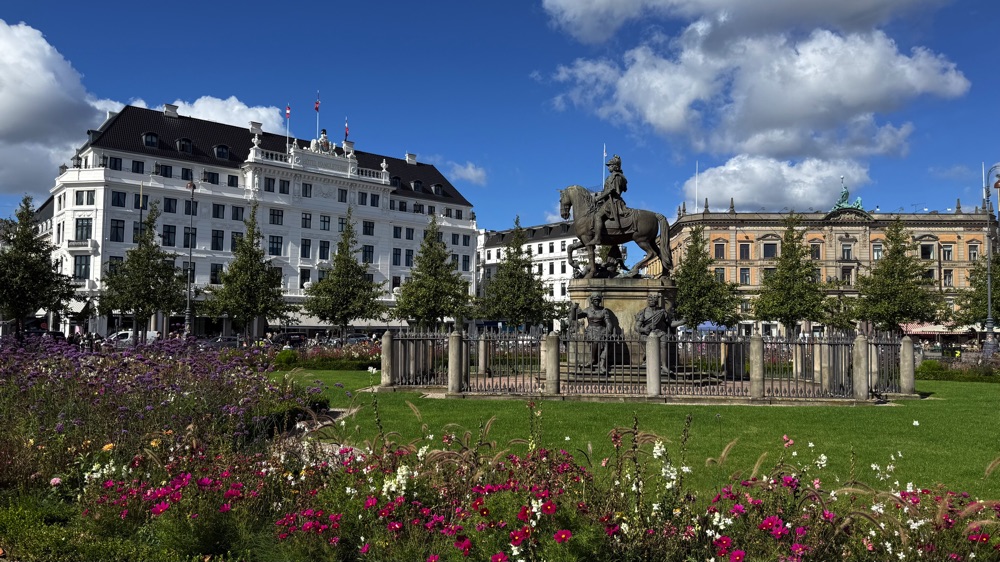
King’s New Square with statue of Christian V on horseback

We had lunch in Nyhavn with time to explore the picturesque King’s New Square with its well-tended lawns and gardens around the statue of Danish monarch Christian V on horseback. Also located next to this square is the striking white Hotel D’Angleterre and the Royal Theatre plus the prestigious department store, Magasin du Nord. 

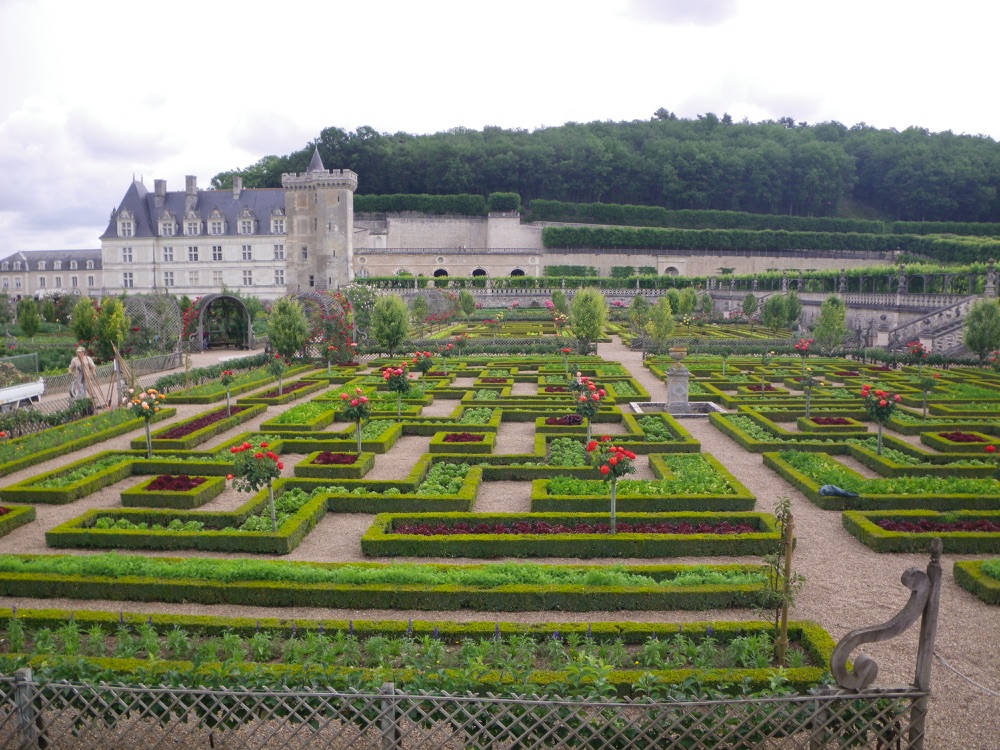
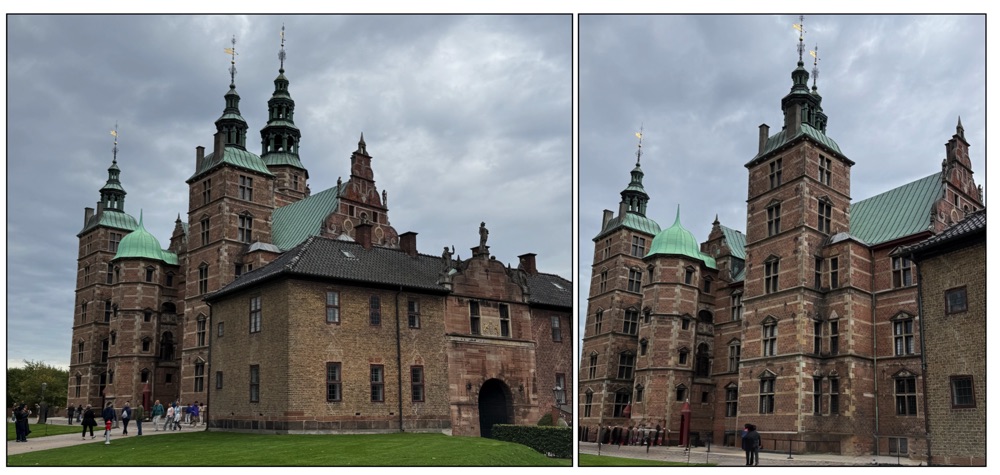
Rosenborg Castle which also has a beautiful garden

After lunch, we visited the 400-year-old renaissance Rosenborg Castle with its lovely parterre garden. The castle was originally built as a country summerhouse in 1606 for King Christian IV and contains spectacular treasures and jewels as well as many lavish and impressive decorative touches.

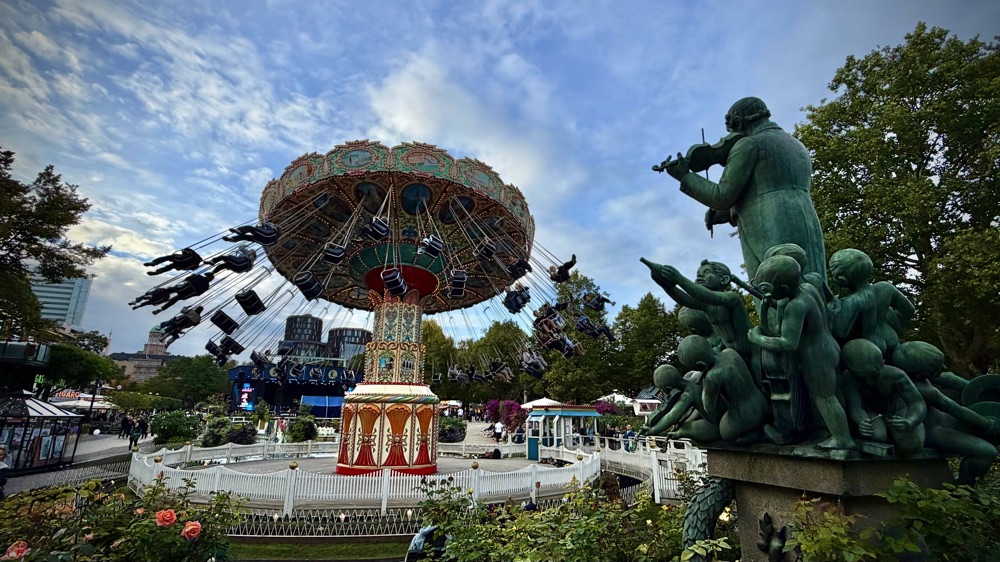
Tivoili Garden is a remarkable attraction in the heart of Copenhagen

Later in the afternoon, we visited Tivoli Gardens, one of the oldest garden-amusement parks in the world, supposedly the inspiration for Disneyland with its artful mix of gardens, restaurants and amusement park rides.

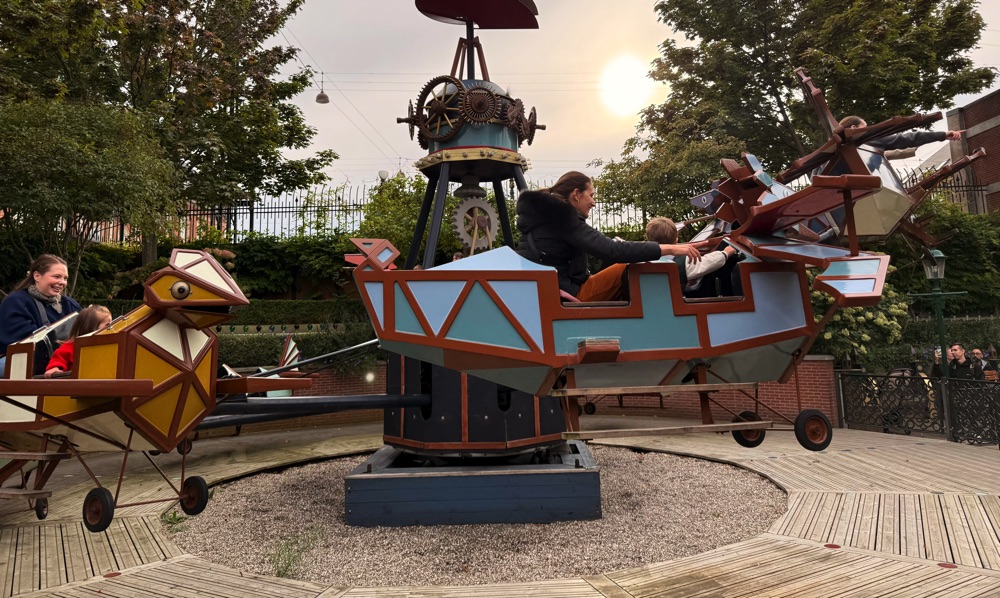
Most of the rides at Tivoli are antiques with names like The Astronomer and The Little Dragon and a classic carousel. It was fun to see these rides operating with their old-fashioned hand-painted decorations and compartments that clearly date from another century. Some of the game stalls on the side featured quirky, charming offerings, such as a horse race with realistic live commentary. 

Many of the rides at Tivoli are antiques that were originally hand-painted
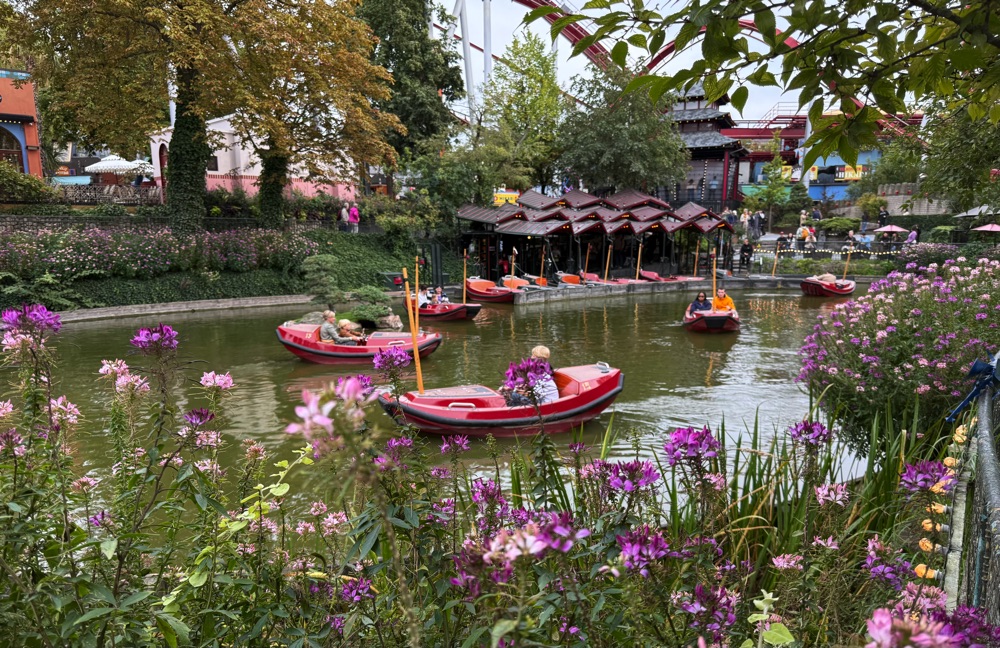
Gardens at Tivoli are very impressive and the little boating lake is charming

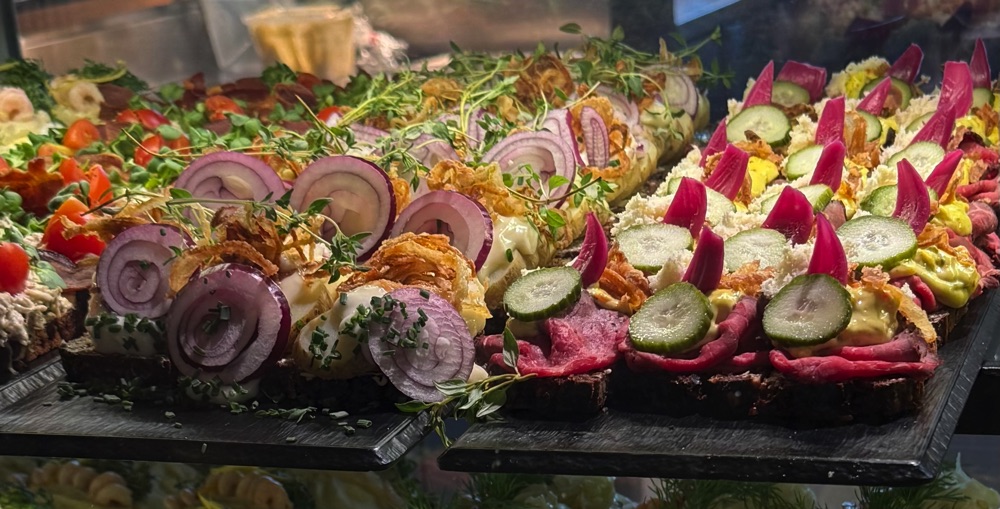
At the Tivoli Food Hall, located next to the garden, we were able to taste an assortment of the famous Danish smorrebod – open-faced sandwiches with an wide assortment of toppings, placed on a delicious flat dark slab of rye bread.

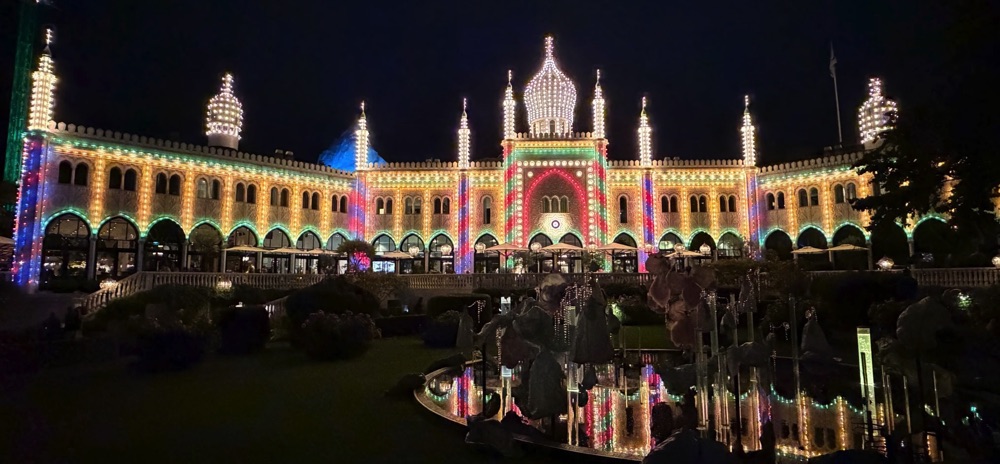
Some of our group visited the gardens at night when the park was transformed into a wonderland of colourful lights and there were concerts under way in the grounds. It was truly astonishing that a city the size and sophistication of Copenhagen could also house in its centre one of the busiest and most thriving amusement parks. But we also found the botanical content of the gardens to be of the highest standard with very impressive floral displays, particularly water features and very creative container plantings.

Open-faced sandwiches at Tivoli Food Hall are an artistic masterpiece
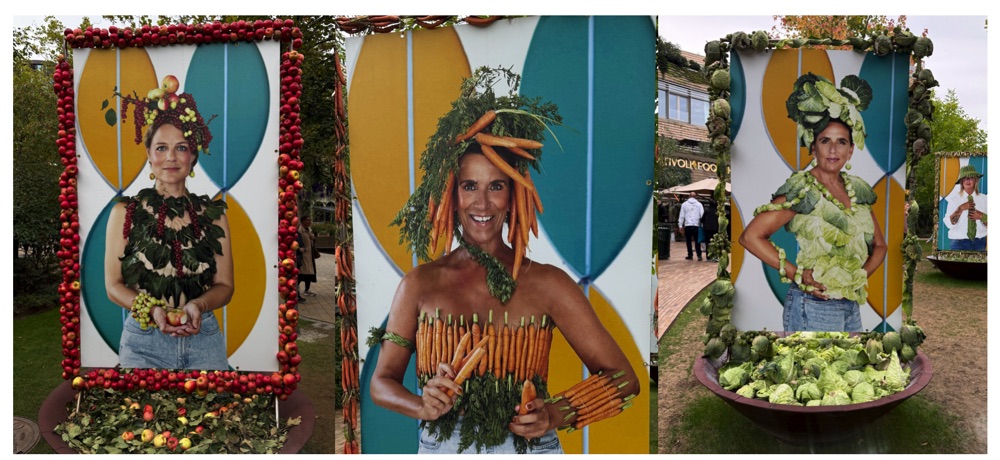
Fun images helping to decorate the way to the Tivoli Food Hall

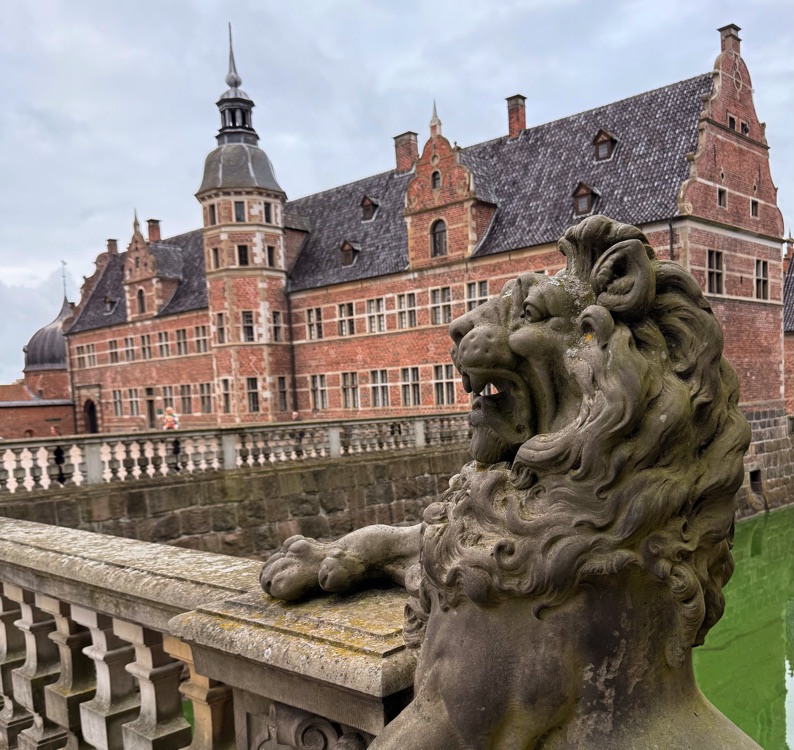
The next morning, after a long and lavish breakfast, we popped out to Frederiksborg Castle in Hillerod to see the spectacular Renaissance royal residence built for Christian IV in the early 17th century with its impressive formal Baroque style garden. 

Frederiksborg Castle in Hillerod

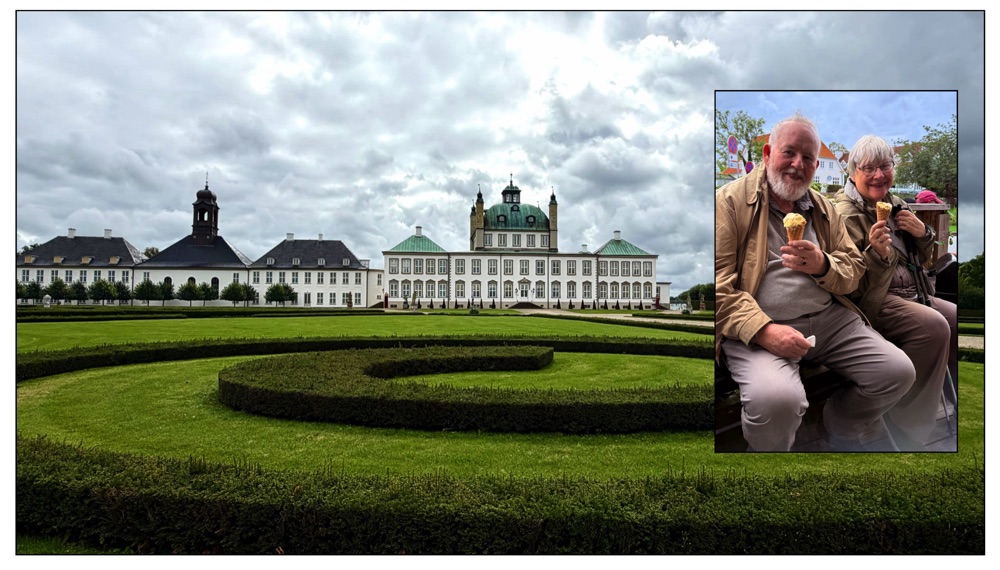
From Frederiksborg, we next went to Fredensborg Palace Gardens in Fredensborg, a huge formal estate, considered the most important and spectacular Baroque garden in Denmark.

We were overwhelmed by the vastness of the estate and eventually gave up trying to see it all and settled instead for delicious creamy ice cream in the village.

Fredensborg Palace Gardens in Fredensborg

Back in Copenhagen, we returned to the bustling Stroget district and explored more extensively the series of connecting streets, Frederiksberggade, Nygade, Vimmelskaftet, and Østergade, passing through delightful historic squares such as Nytorv, Gammeltorv, and Amagertorv. 

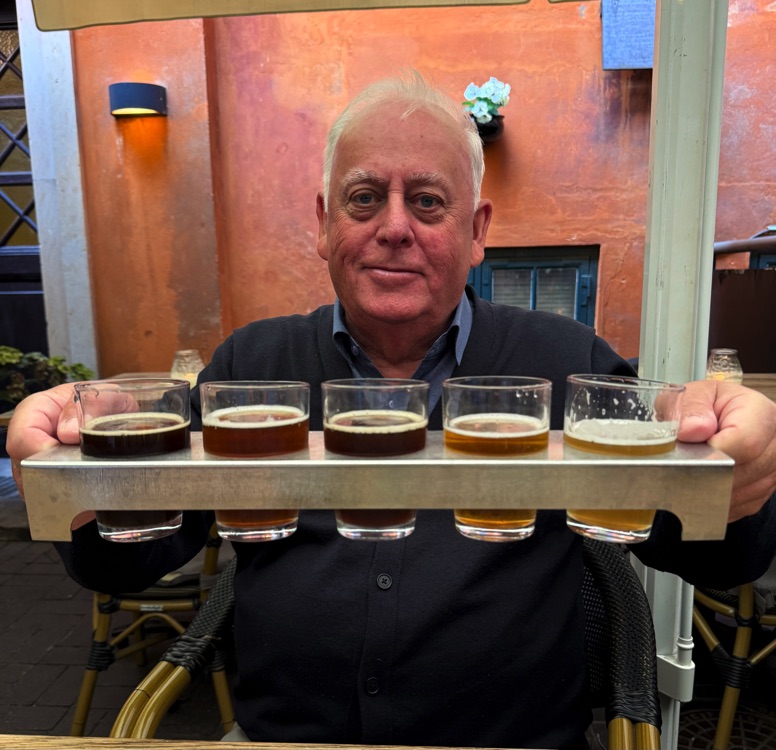
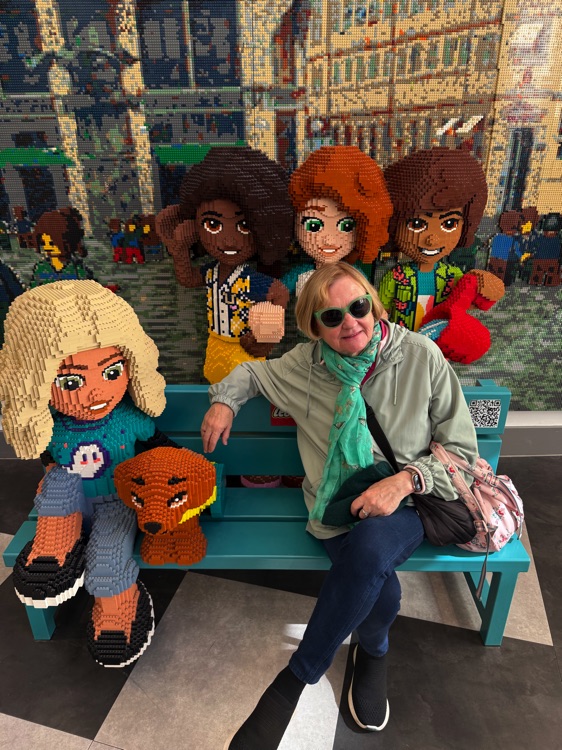
On the way, we popped into the hugely popular Lego store and also found time to do some beer tasting at Copenhagen’s acclaimed Brew Pub.

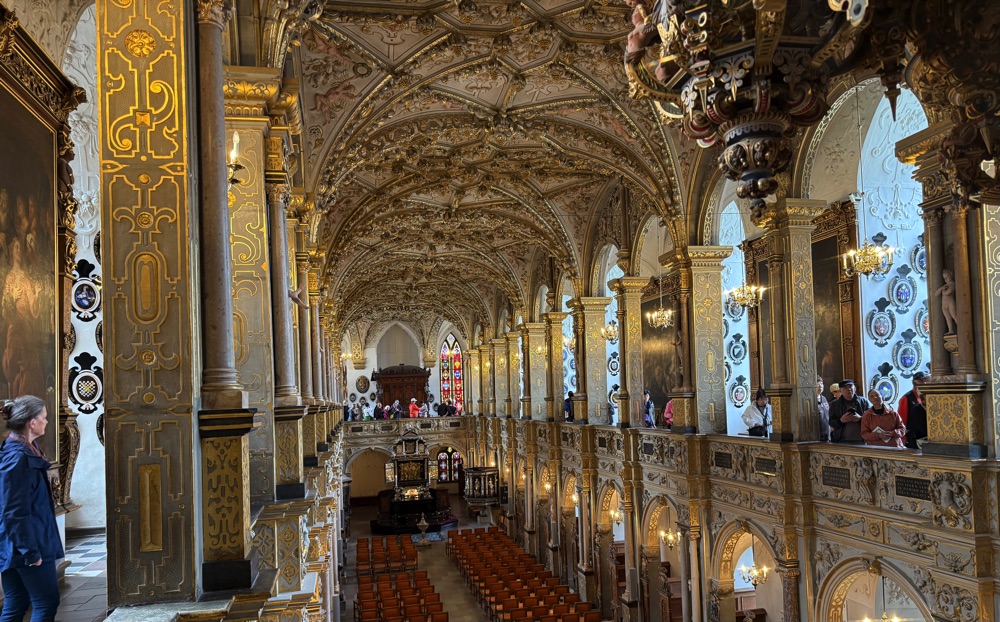
Elaborately decorated church at Frederiksborg Castle

The next morning, Sunday, with free time to continue exploring the city, we returned to the Nyhavn area, passing the famous Round Tower (Rundetaarn) on the way and pausing for a delicious Irish coffee before reaching the spectacular Marble Church (Frederil’s Church) with its amazing green copper dome. 

In the afternoon, we all went for an exclusive food tasting at the Torvehallern and Broens Gadeskokken, two of the city’s premier food destinations. These turned out to be modern food markets with a bustling atmosphere and a wide selection of gourmet foods. We got to taste fish and duck dishes and cheeses as well a creative fruit-porridge dish. 

Beer tasting at Copenhagen's Brew Pub

Later, we moved to Vita Restaurant, considered one of the city’s classiest eateries on Store Kongensgade, where we were welcomed with a glass of prosecco and then got to taste some classic Danish sandwiches with a glass of Schnapps to wash it all down. Some didn’t want the Schnapps, so others obliged by having an extra glass . . . or two.

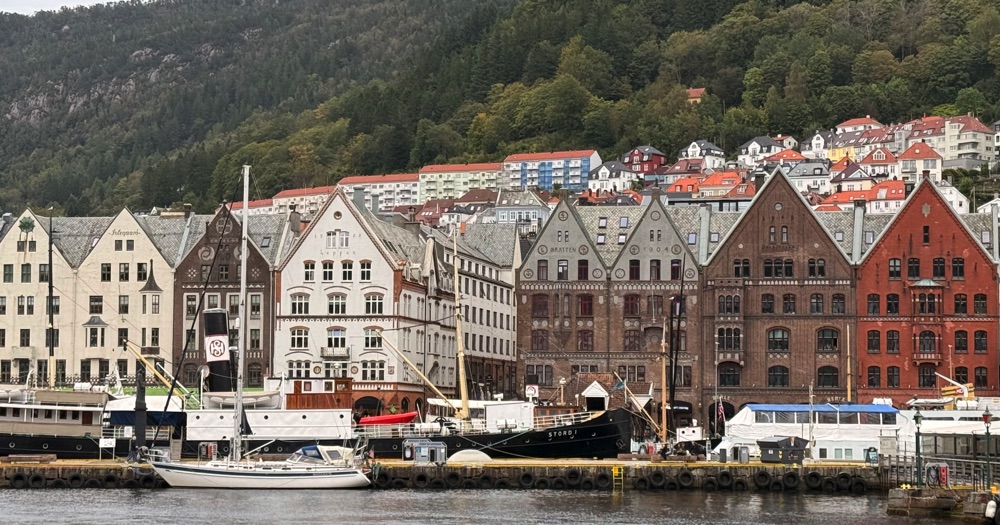
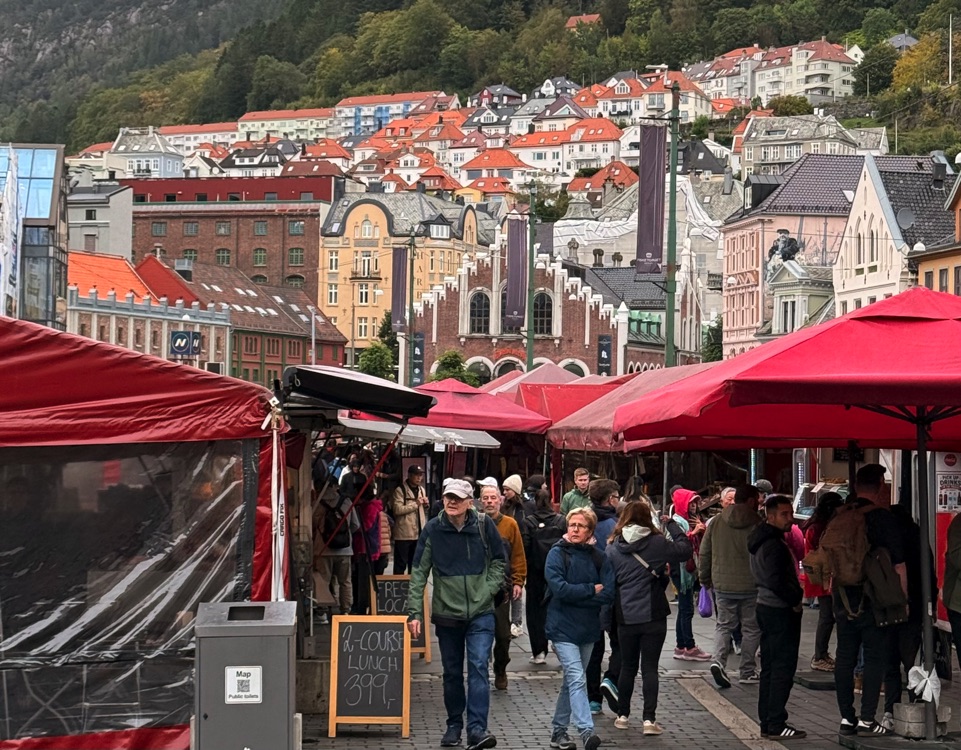
Bergen waterfront with its row of pretty, colourful buildings.

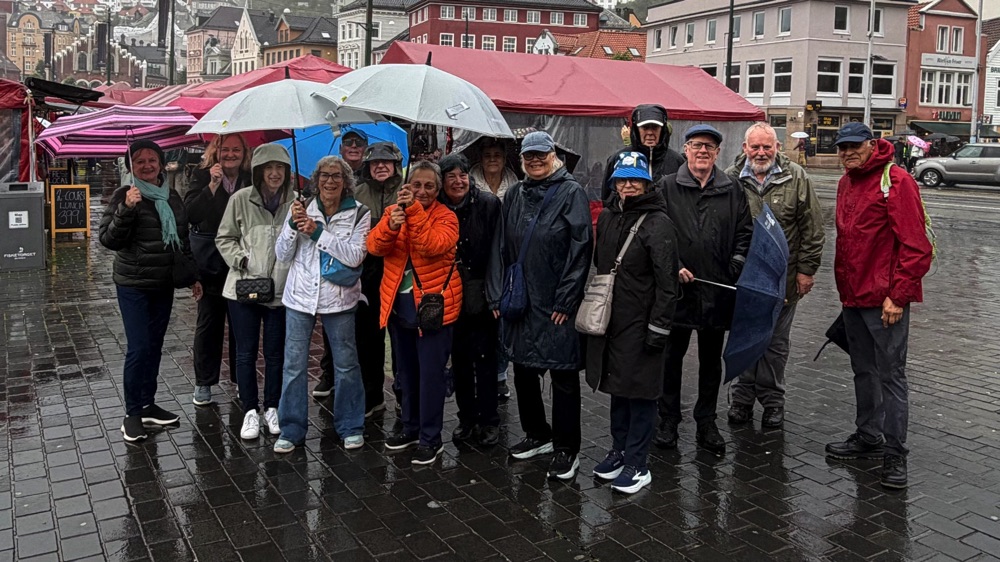
On Monday, Sept. 14, we flew to Bergen, Norway’s second biggest city, where it is said to be always raining. It is also one of the only cities with its own umbrella museum. 

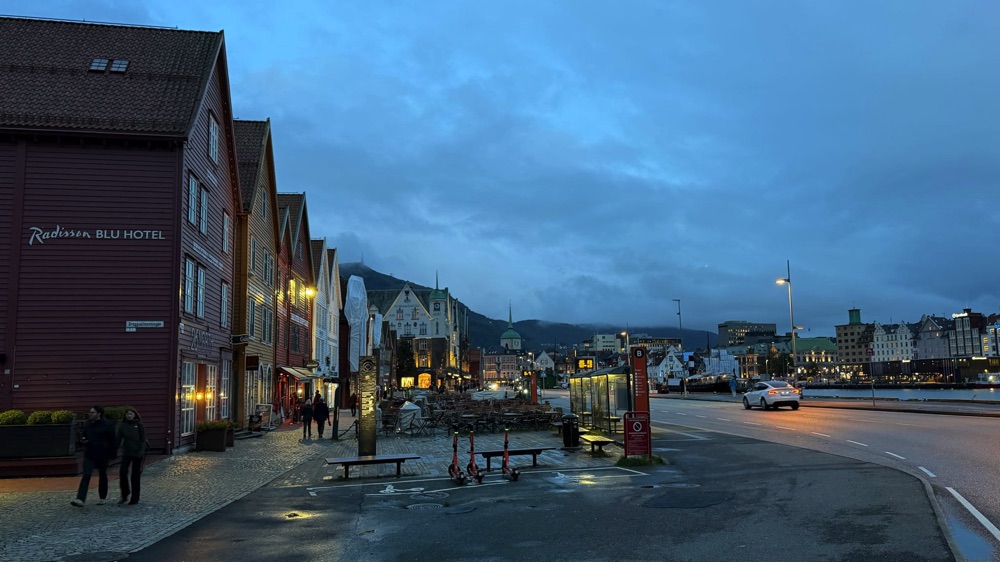
Night view of Bergen waterfront area
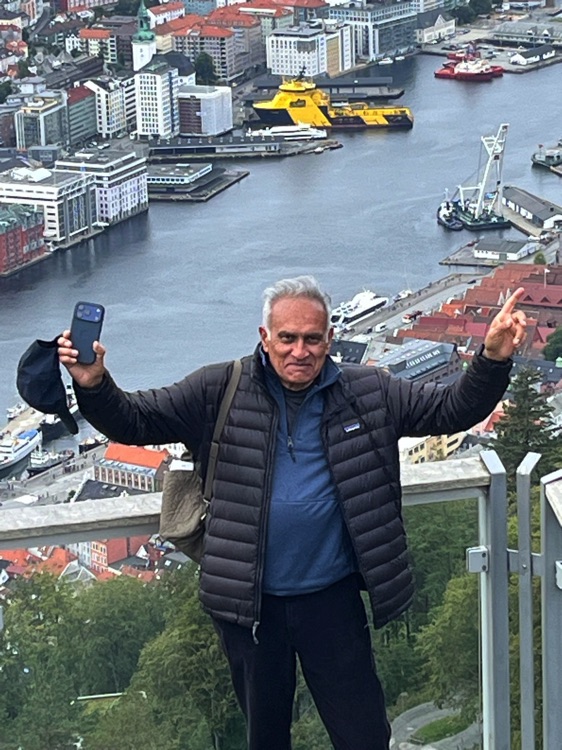
Hitting the heights in Bergen.

We arrived early and left our luggage at our very well located hotel, Havnekontoret, right on the waterfront next to the long line of colourful shopfronts and buildings which Bergen is famous for. We later found out many celebrities, including Jerry Seinfeld, Nick Cave, Back Street Boys, and Tom Jones had also stayed at this hotel.

Some of the group immediately seized the opportunity to take the funicular to the hilltop to get a spectacular view of the harbour and town and surrounding countryside.

Bergen fish market

We came to Bergen to be in Viking country and close to one of the longest and most accessible fiords in the country. Our plan was to visit a well-known Viking village and then take a relaxing boat ride down the fiord.

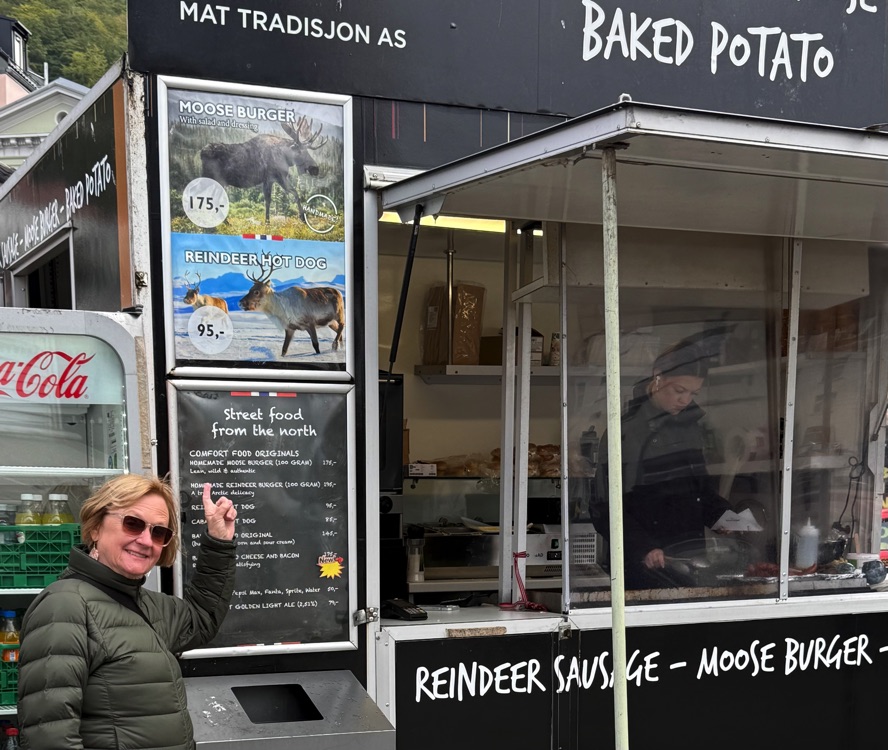
Reindeer meat on the menu in Bergen

But before all of that, we needed to explore Bergen itself, especially its famous fish market where we were to taste the city’s famous “fish soup” and taste a wide selection of sea fare from prawns to scallops to salmon and cod dishes. 

We also found time to visit the Fantoft Stave Church, a 12th century church built entirely of wood. The original was burned down by arsonists in 1992 but it was completely re-built and today is a superb example of masterful carpentry.

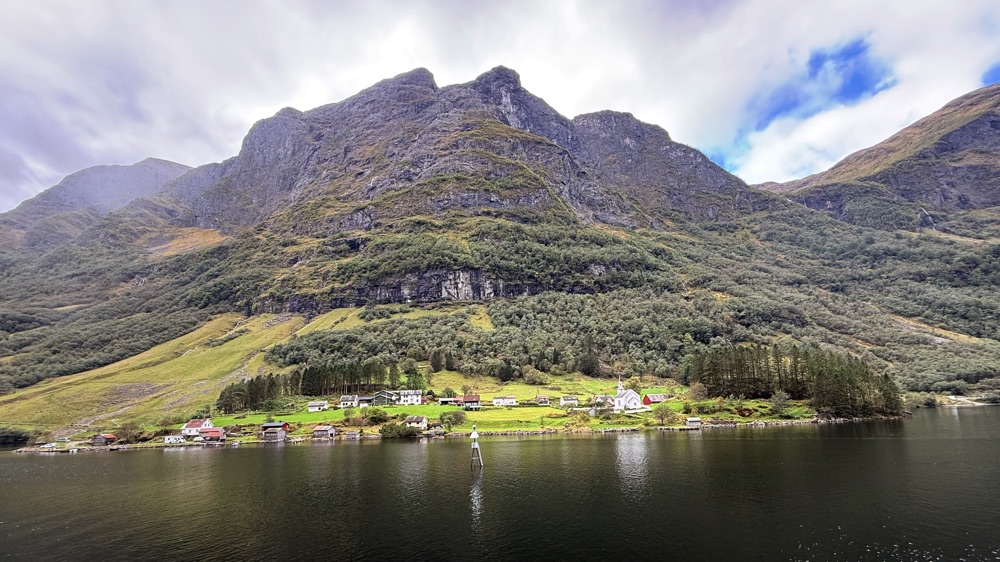
Fiord outside Burgen

Our guide, Per Dahlstrom, who was superb throughout our adventure, told us to set out watches back 10 years as we arrived in Bergen. We received this as just the normal good-humoured Swedes teasing of Norwegians. We later figured out that Norwegians like the Danes but have less sympathy for Swedes who they regard as a little arrogant and overbearing. That, however, was never our experience. We were too busy balking at the high price of things in Norway – three or four times at least what we pay in Canada.

Land of the Vikings, north of Bergen

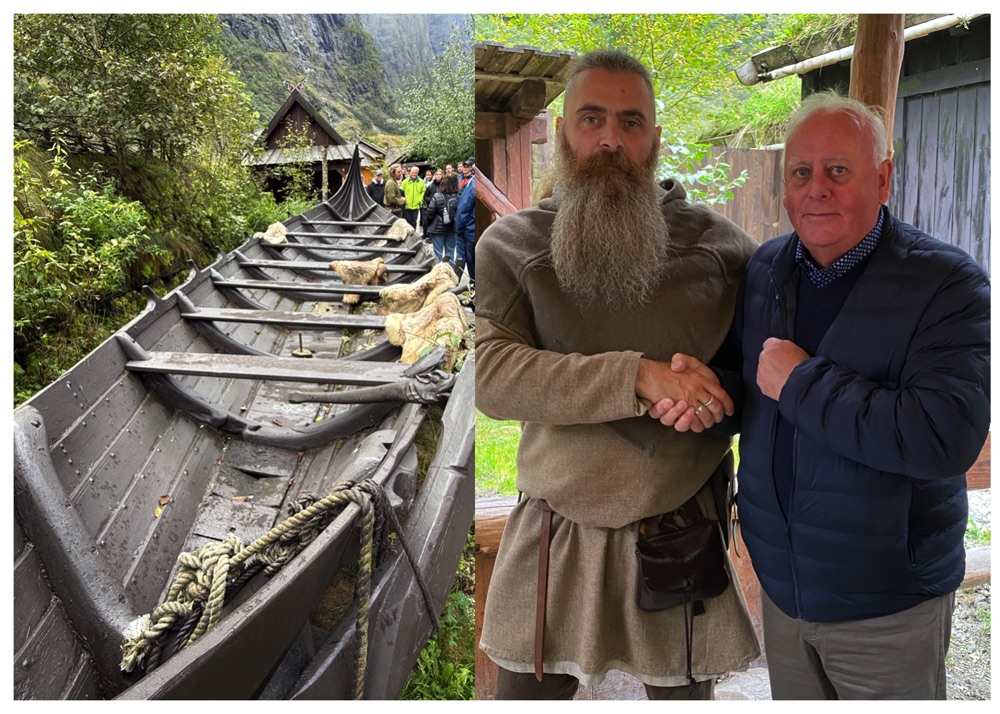
From our base in Bergen, we headed out to the Viking Valley in Gudvangen. On the way we saw countless mountain waterfalls and rushing streams and verdant forested hillsides. At the Viking village we were treated to a demonstration of Viking skills with axes and swords and bow and arrows. We also learned how the Viking ships were built and why they definitely never had horns of their helmets – a movie and cartoon affectation.

Apparently, horns would have only made the helmets less effective and more dangerous to wear. A sword blow to a horned-helmet would have broken the neck of the wearer rather than causing the blow to glance off without doing damage.

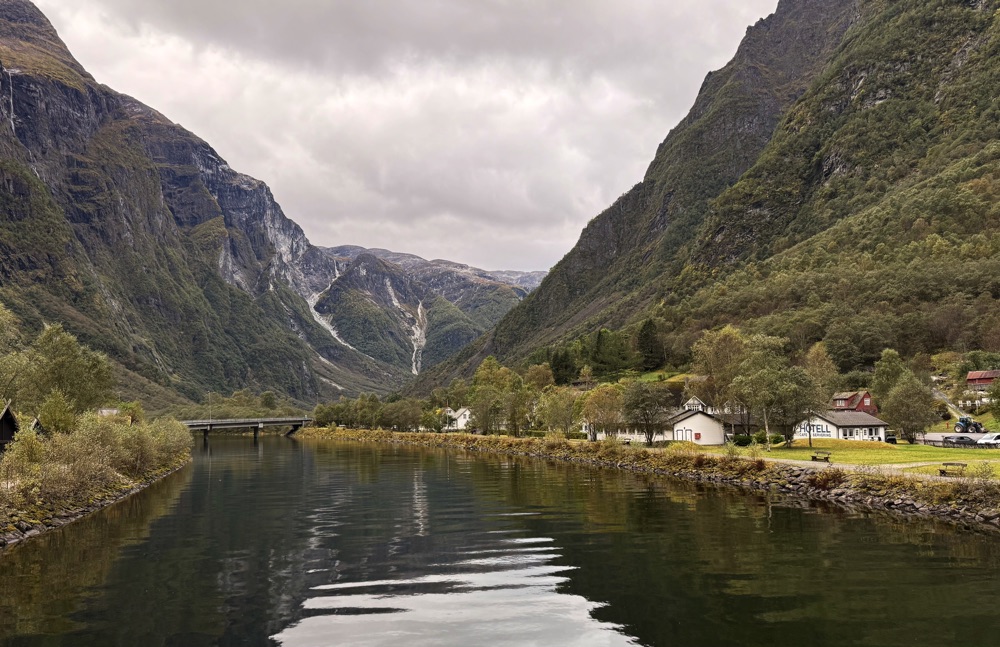
Serene scene on the idyllic fiord north of Bergen

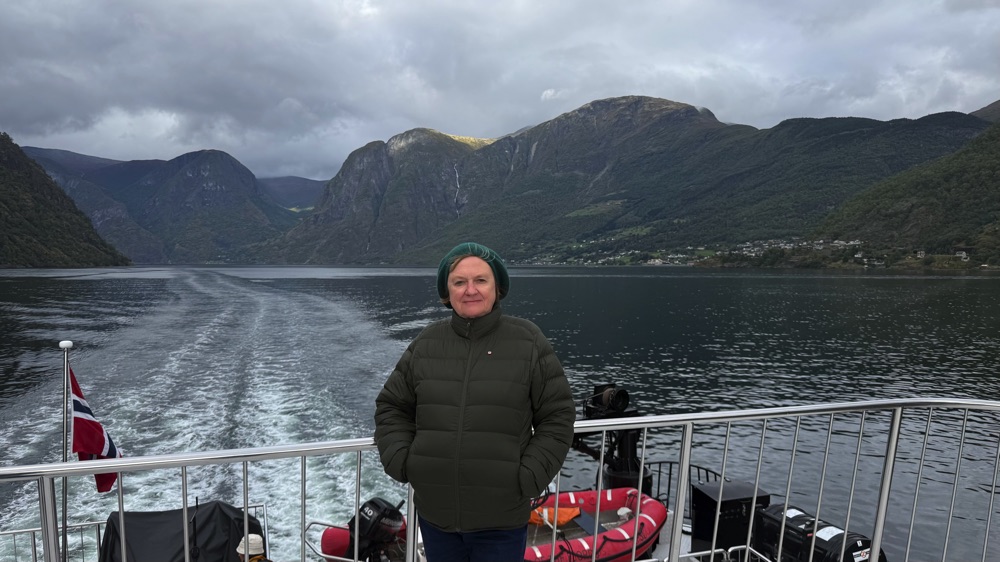
From the Viking Village, we took a two-hour boat ride, gliding leisurely along the fiord from Gudvangen to Flam, passing through some of the most glorious mountain scenery with waterfalls and impressive rock formations and lush forests. It was easy to imagine, in such a powerful and overwhelmingly harsh and rugged environment, why the Vikings were so tough and how they came up with so many imaginative Norse legends and stories. It is no surprise that people from such a cold, wet, bleak and unforgiving environment of lakes and forests would want to find less punishing pastures to plough, and why they became such fierce and unrelenting colonizers.

With a Viking in authentic costume and Viking vessel. Please don't kill me.
On the boat, gliding down the fiord north of Bergen

Back in Bergen, my group hunted once again for the best restaurants in town and found them and wasted no time in celebrating by tasting all the best of Norwegian cuisine. 

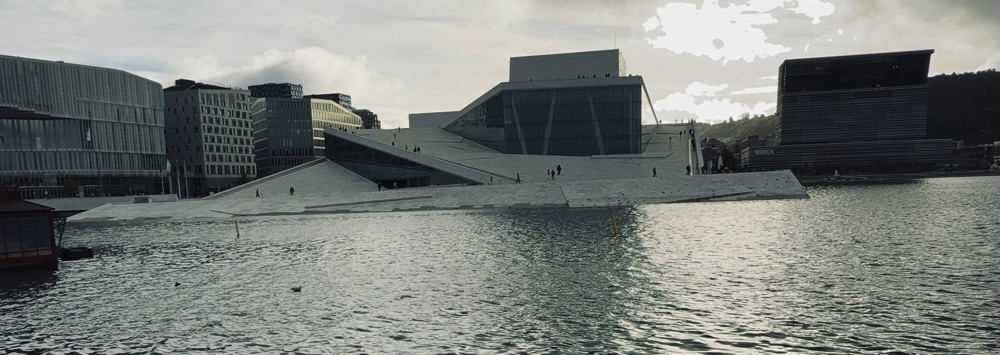
The striking opera house in Oslo

From Bergen, we next took the train, a classic journey through some of the most remote and picturesque parts of the country, to Norway’s capital, Oslo. It was a long ride, taking seven hours, but it is one of the most spectacular scenic experiences in Europe as the train crosses the Hardangervidda National Park, onto the Hardangervidda plateau, Europe’s largest high mountain plateau.

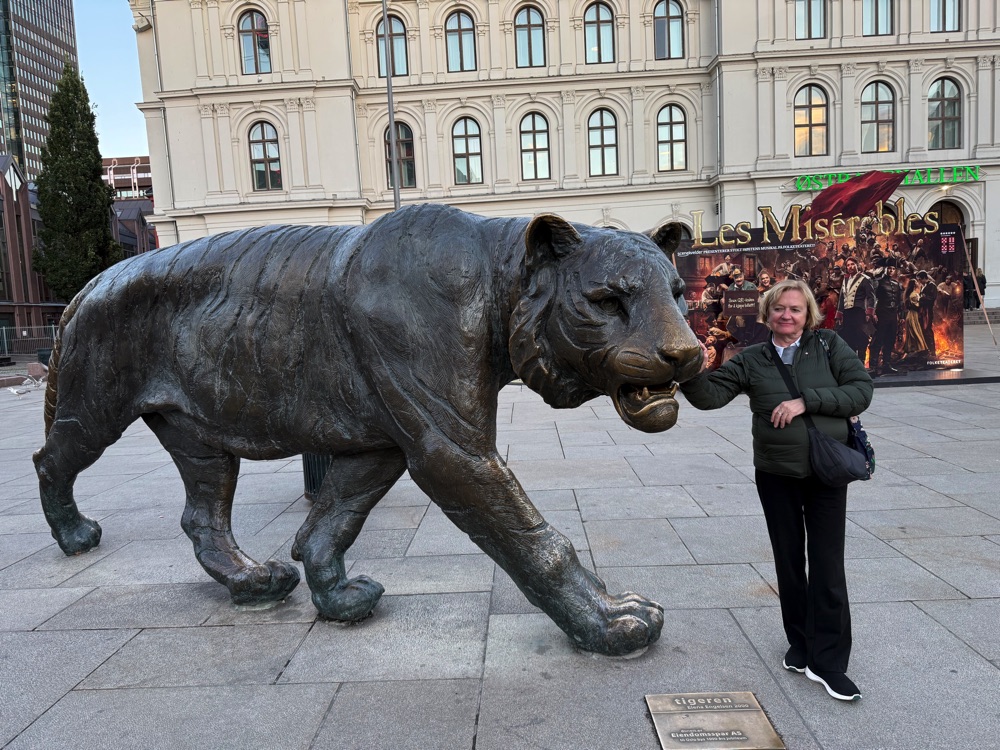
Tiger, tiger burning bright in the heart of Oslo

We arrived in Oslo, a little weary but happy and enthusiastic. We checked into our hotel, the Radisson Blu Plaza, with time still to party before collapsing into bed for the night. 

Like Copenhagen, Oslo is also a solidly water-based city with amazing waterfront walks and views. We toured the city, starting out with a visit to the famous Oslo National Opera House building, the astonishing white marble building with its dramatic “wave wall” architectural profile right on the waterfront. 

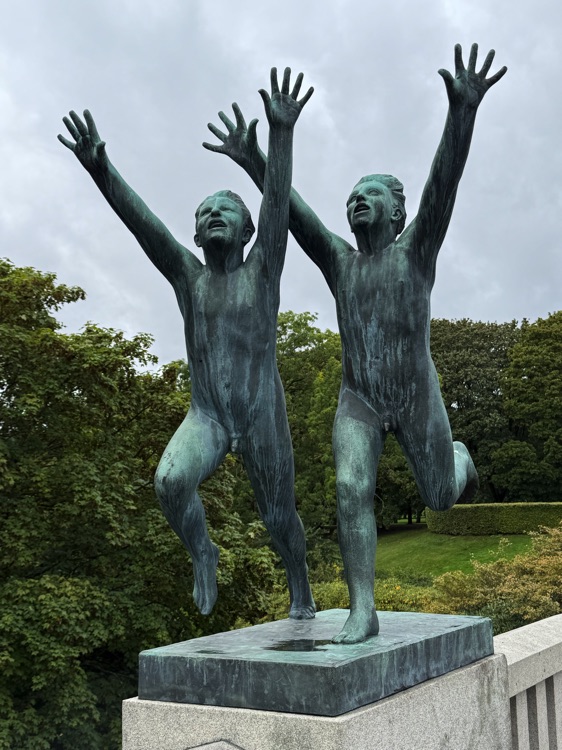
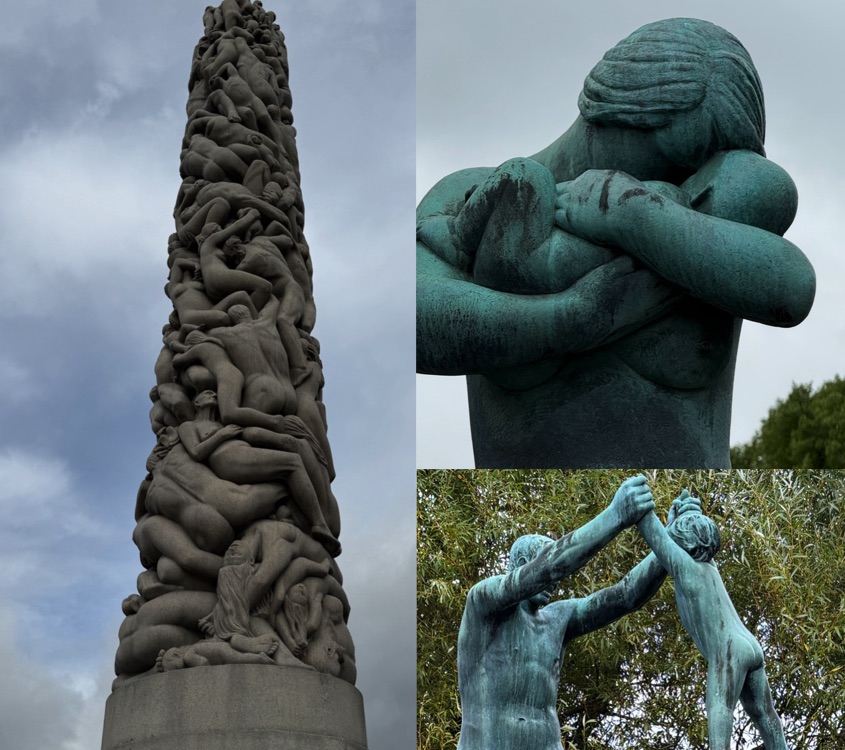
One of Vigeland's more joyful sculptures in the Oslo park named after him.

We walked the facade of the opera house and viewed the rows of saunas along the harbour front and the Iceberg art installation anchored in the bay. Nearby, we could see the Munch Museum, dedicated the Norway’s most famous artist. Edvard Munch, best known for his work, The Scream.

We saw the city hall where the annual ceremony for the Nobel Peace Prize is held every year, although it seems these ceremonies are held everywhere, which left us a little confused. Next we went to the unusual Vigeland Sculpture Park, the world largest sculpture park made by a single artist, Gustav Vigeland. 

Some of the striking images in the Vigeland Sculpture Park in Oslo

This park features more than 200 of Vigeland’s works of art in granite, bronze and wrought iron, installed from 1940 to 1949. Norwegians are understandably proud of this park with its sculptures that celebrate all aspects of life from the joy of parenthood to old age. In the centre is a fountain that celebrates the challenge of holding up the nation and there is also an obelisk composed of a complex jumble of human bodies, all tangled together as they press against one another in a push to reach the sky. 

Vigeland did not give any of his sculptural works a title, leaving it up to the viewer how to interpret the images. We, naturally, had mixed opinions, but mostly we came away impressed by the colossal ambition of the work and the space given to this very productive artist.

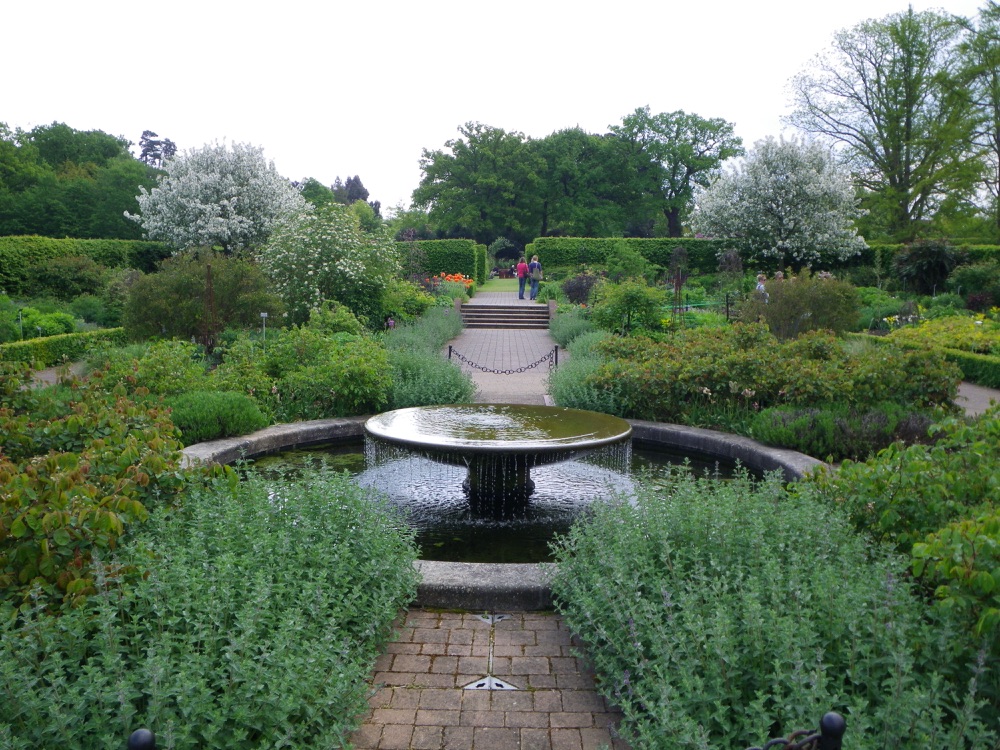
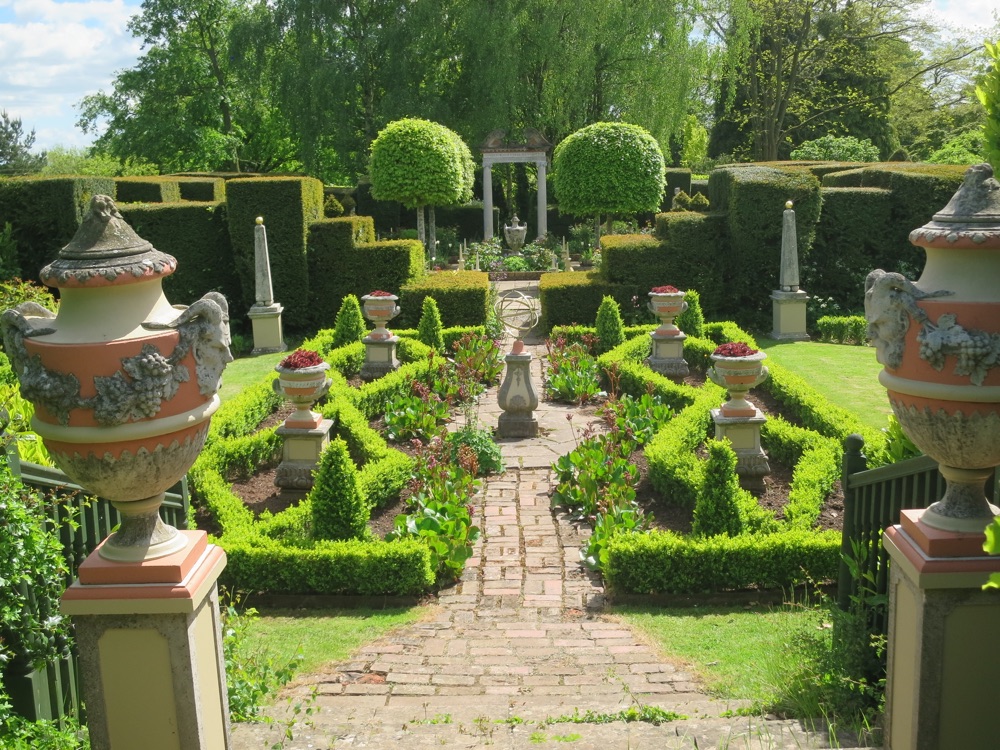
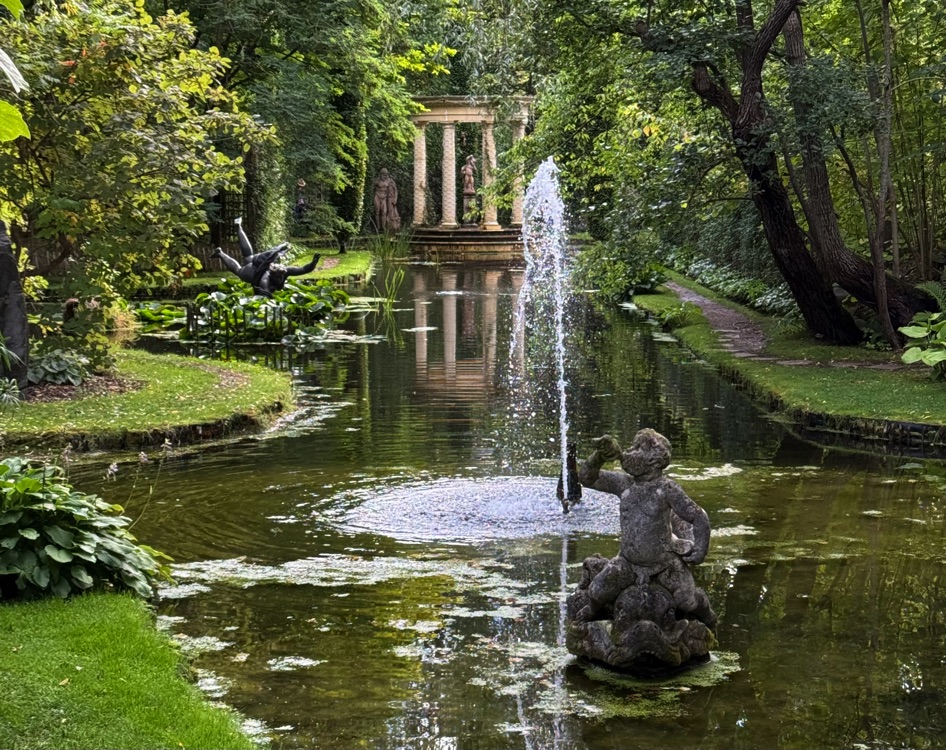
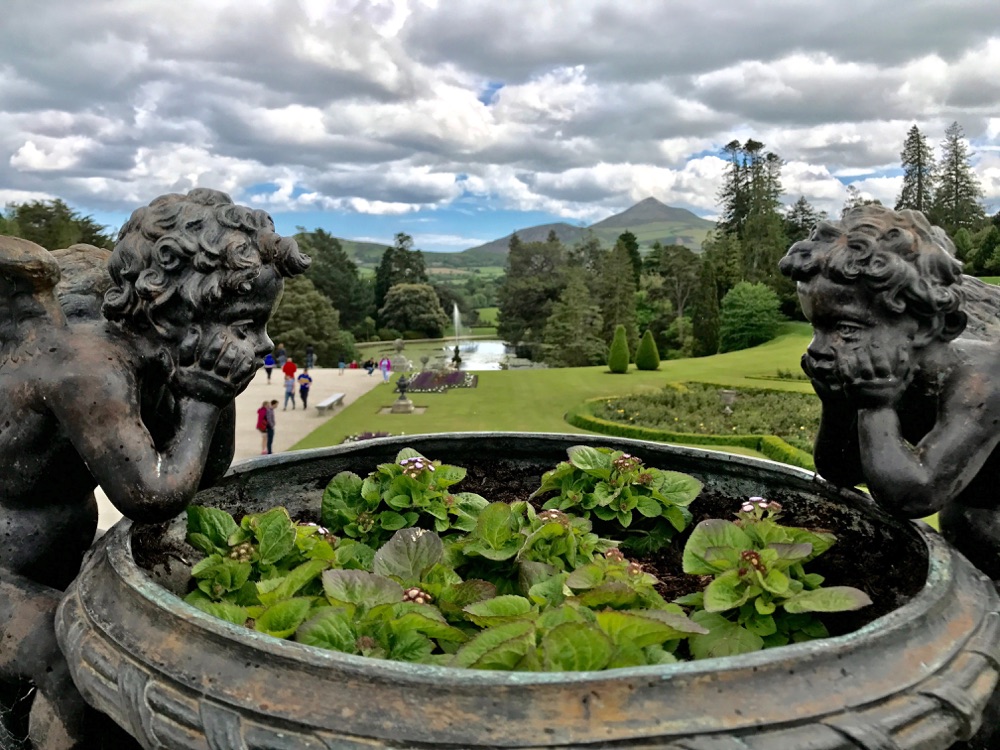
One of the most enchanting vistas inside theHavlyst Garden in Hvisten

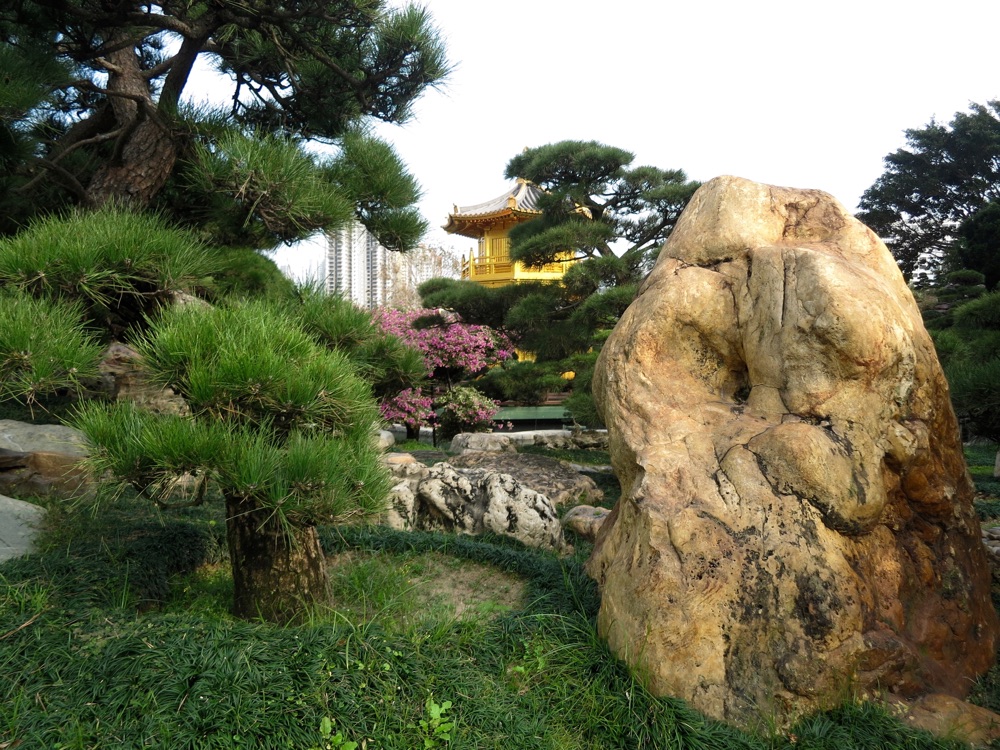
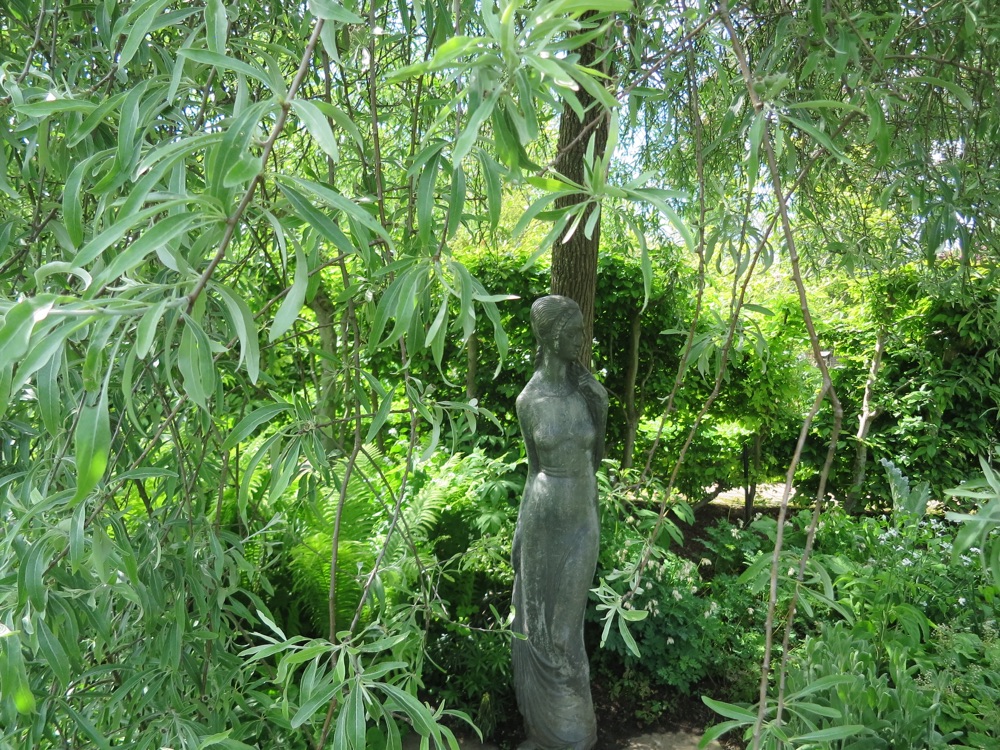
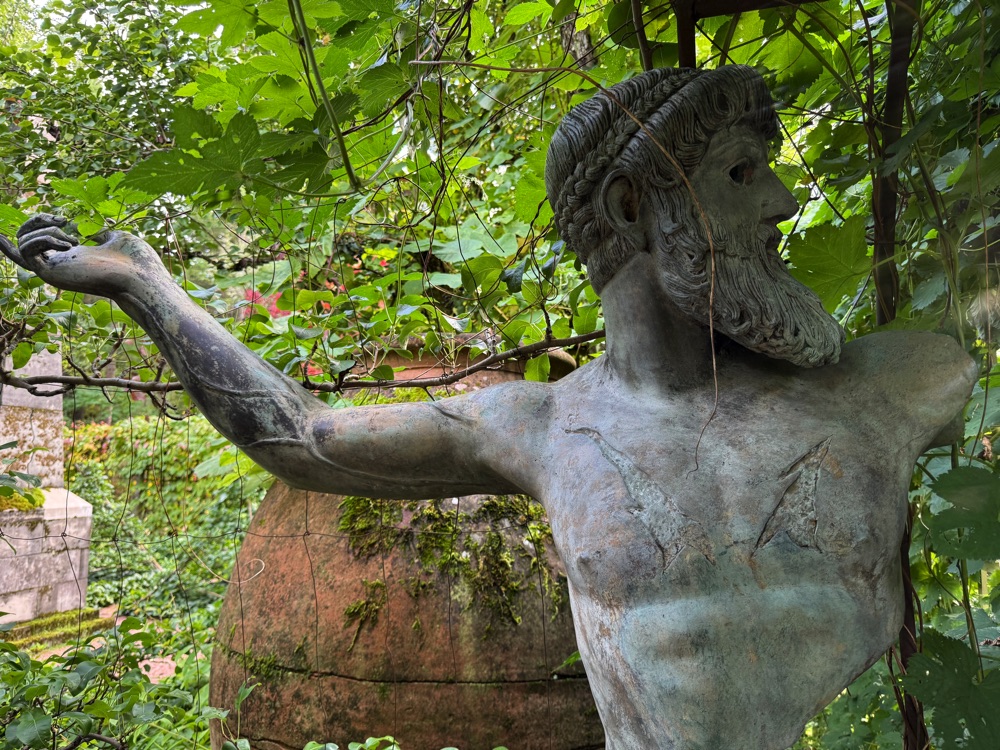
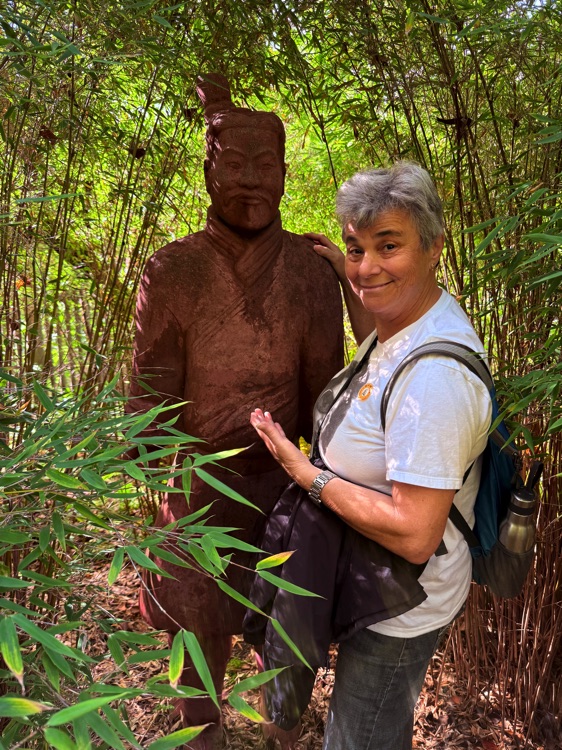
The next day, we took a short ride out of town to visit the Havlyst Garden in Hvisten, overlooking the Oslo fjord. This turned out to be a quirky, enchanting garden full of surprises, including Greek and Roman statuary as well as a bamboo grove with its own Terracotta Warriors.

Greek sculptural artwork in the Havlyst Garden.

The garden was well-hidden and not as easy to find at first as I thought, but we persisted and were thrilled by what we eventually experienced.

The picturesque views and beautiful landscaping were ample reward for our patience and persistence.

The garden also contained many contemporary art works as well as numerous secret, partly hidden corners for quiet contemplation and relaxation. We left the garden feeling inspired and touched by its grace and beauty.

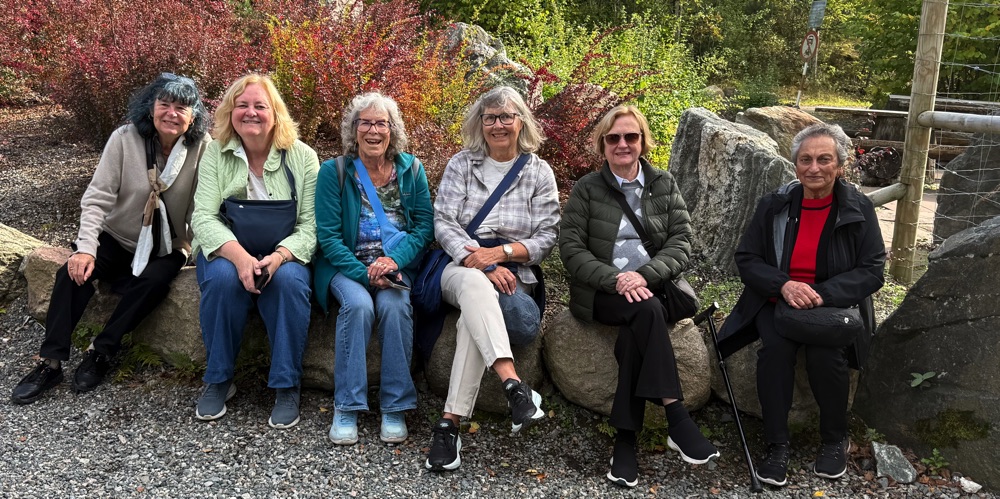
Having fun together in the Havlyst Garden in Hvisten

From Oslo, we next flew to Stockholm, where we again arrived early and after leaving luggage at the hotel, many of the group enjoyed coffee and cakes at our guide’s favourite bakery before heading off to visit the Vasa Museum.

There, they saw the exquisite and extensive restoration of the Vasa, a wooden ship that is often regarded as Sweden’s Titanic because it sank on its maiden voyage, taking all its glorious decorative elements to the bottom of the sea from where it was lifted and painstakingly reconstructed in the 1960s.

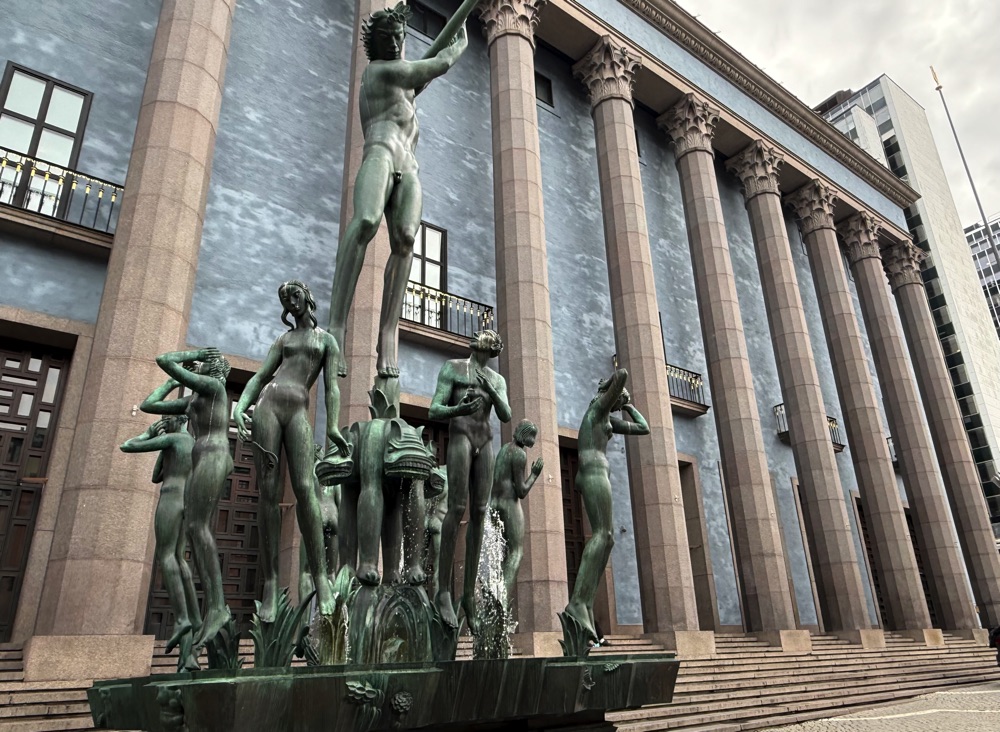
Concert hall in Stockholm where the Nobel prize is presented

Like Copenhagen, Stockholm is an extremely walkable city with many pleasant pedestrianized streets filled with tantalizing shops. cafes, bars and restaurants.

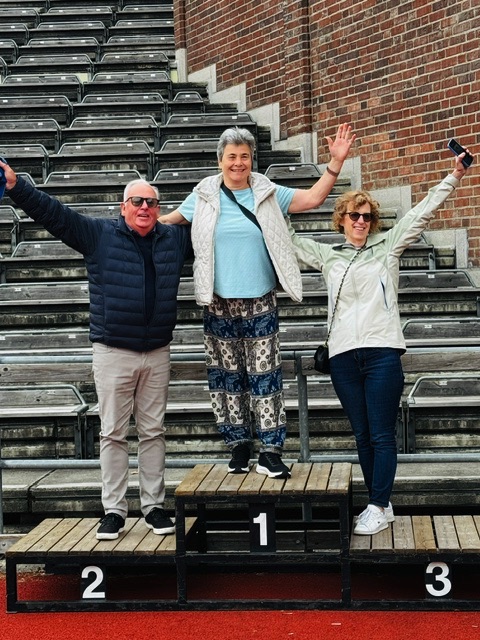
We popped into the Olympic stadium, a classic design that hosted the games in 1912, and we could not resist doing a lap of honour and three of us ended up on the podium.

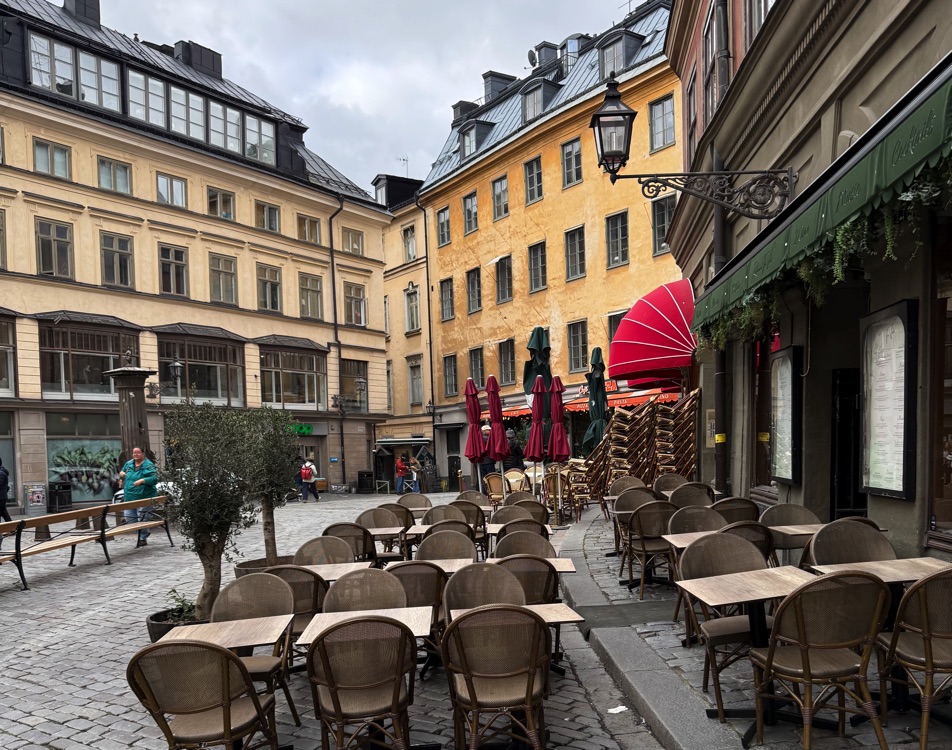
The Old Town (Gamla Stan) with its quaint cobbled streets is particularly attractive and fun to walk around. It is a neighbourhood dating back to medieval times with many lovely narrow cobblestone streets lined with more gifts shops and restaurants, bars and cafes as well as many delightful and surprising architectural points of interest including the Royal Palace and the historic Stockholm Cathedral. 

On the podium in the Olympic stadium in Stockholm

In Stockholm, we fell in love with Drottninggatan the main pedestrian-only shopping street, which stretches 1.5 kilometres through the Norrmalm neighbourhood.

Very close to Drottninggatan Street, is the Haymarket Hotel, which we enjoyed looking inside as it was once the department store where Greta Garbo worked as a sales clerk and where she was discovered.

The hotel still maintains its 1920s retro-glam Hollywood style with Greta’s, a cafe/champagne bar, and the award-winning Americain cocktail bar.

View inside Stockholm's very quaint Old Town
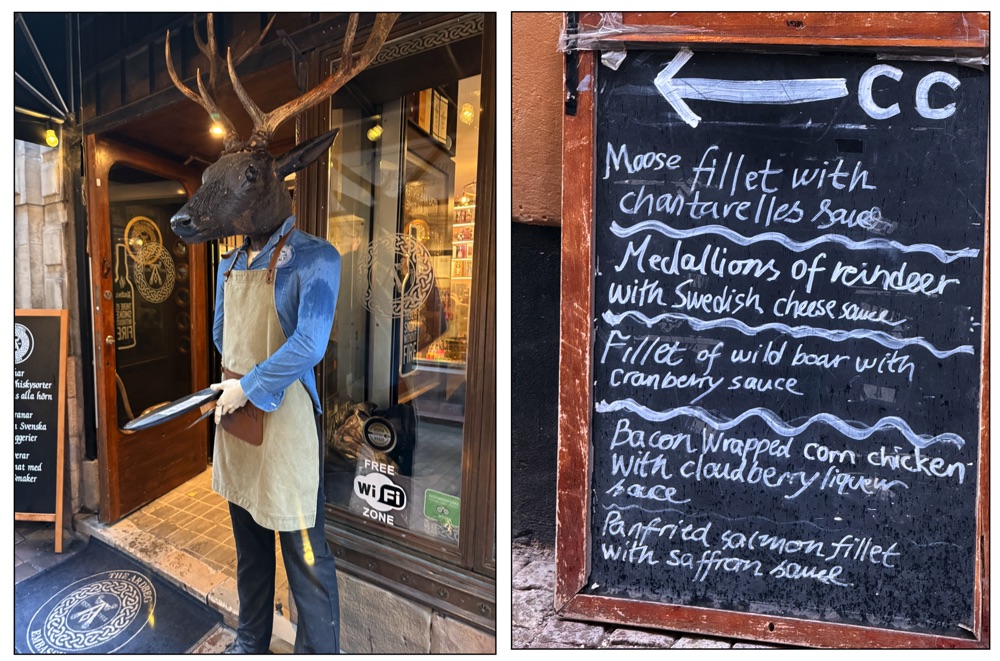
Oh dear, look who's on the menu.

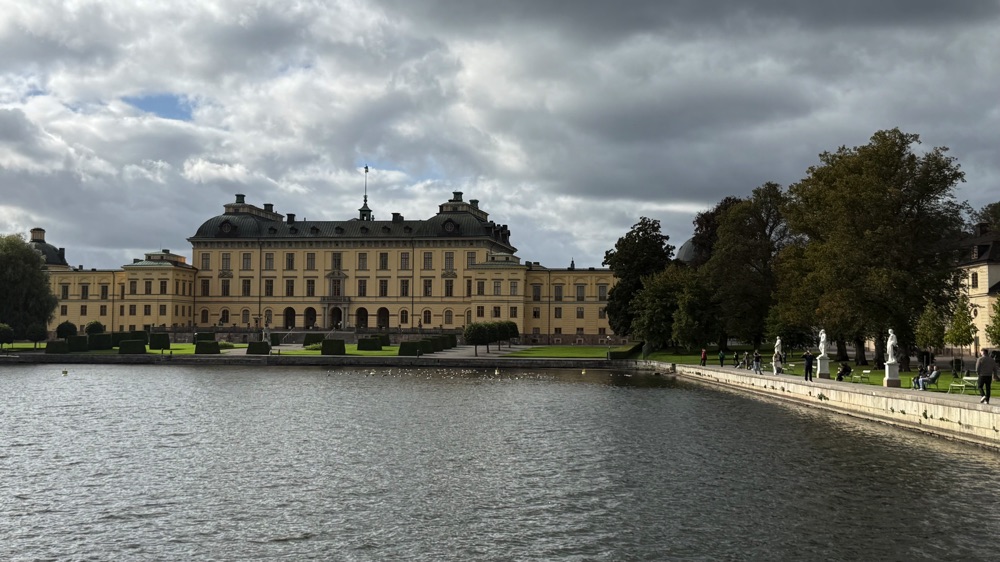
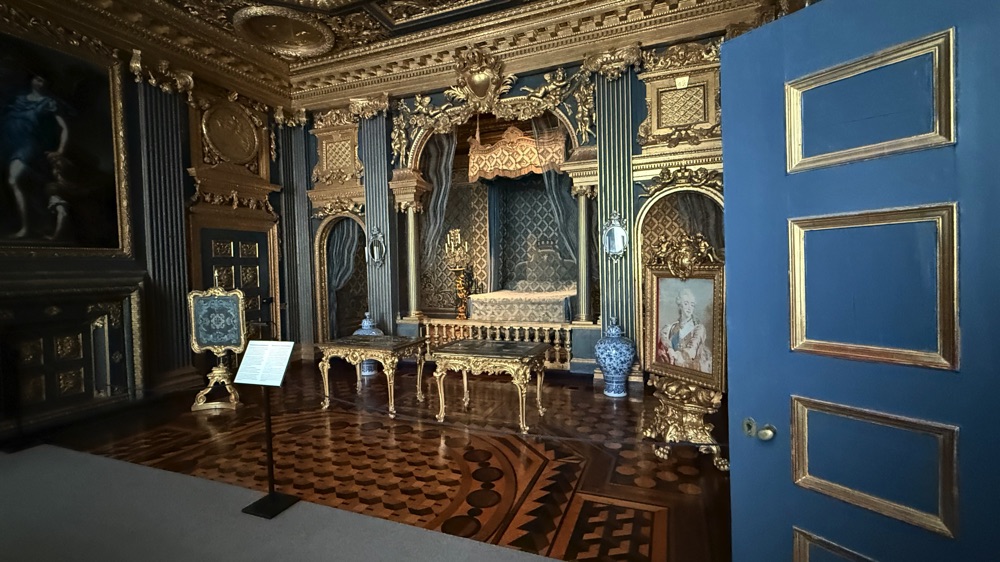
Taking a short boat ride, we next visited the lakeside Drottningholm Palace, a superb yellow-coloured UNESCO World Heritage Site.

We enjoyed exploring the lavish interiors as well as the beautiful baroque and English gardens. Built in 1662, the palace served as a regular summer residence of the Swedish royal family and was used during most of the 18th century.

Drottningholm Palace
Swanky bedroom at Drottningham Palace

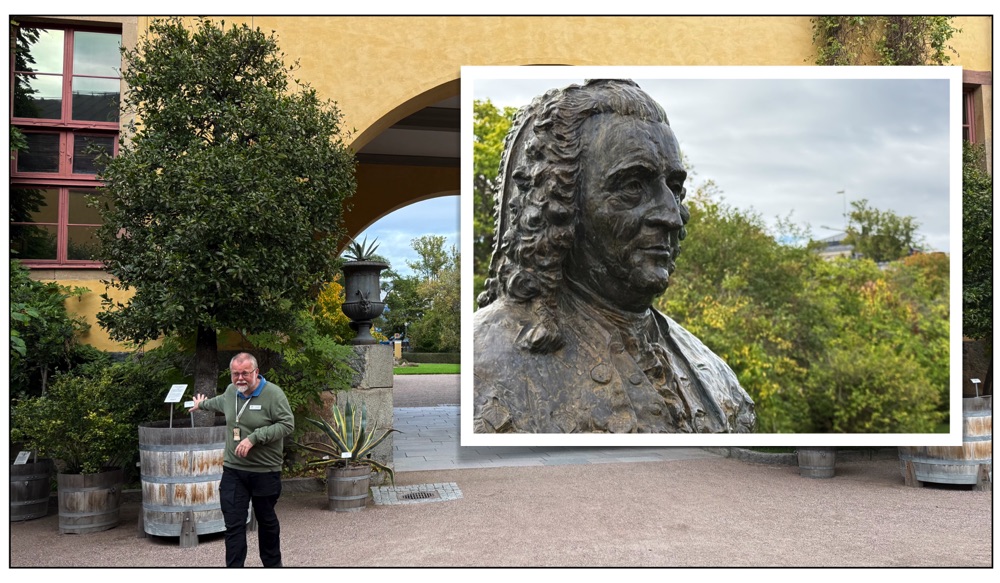
For the last day of our tour, we took a short ride out of Stockholm to the city of Uppsala to visit two very special and unique gardens – the university botanical garden and the Linnaeus Garden, both with deep connections to Carl Linnaeus, the Swedish botanist and physician who came up with the clever idea of how to name plants, putting them into their specific family and botanical groups. Linnaeus is commonly called the “father of modern taxonomy” – the universal two-part naming system used in science today. 

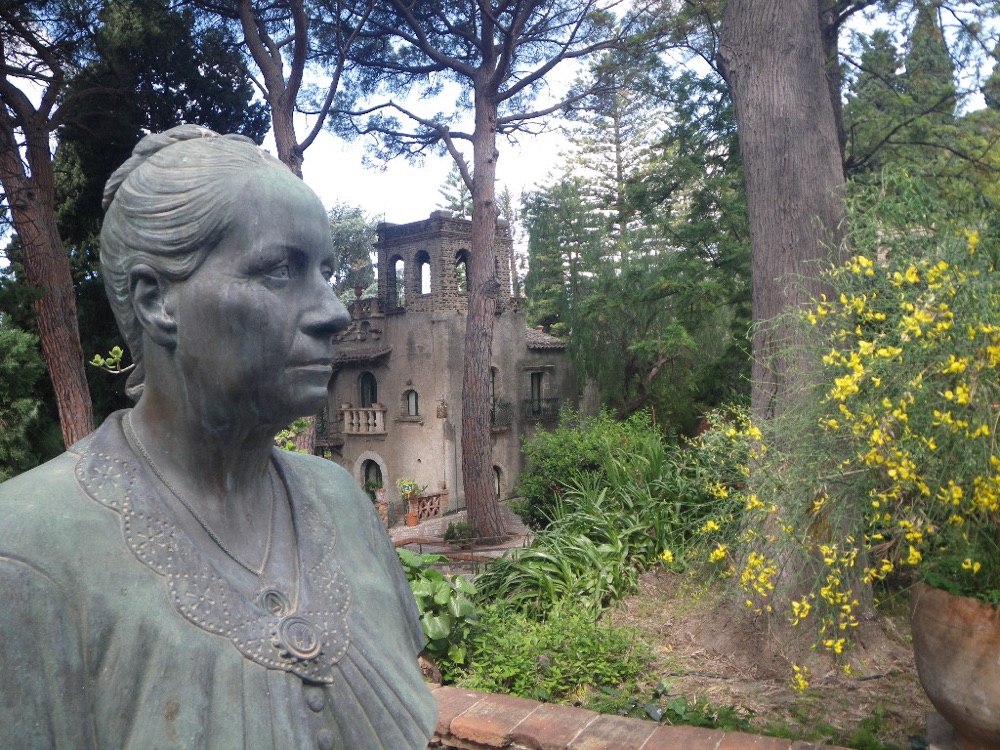
Bust of Linnaeus and Per Erixon, curator of Uppsala University Botanical Garden.

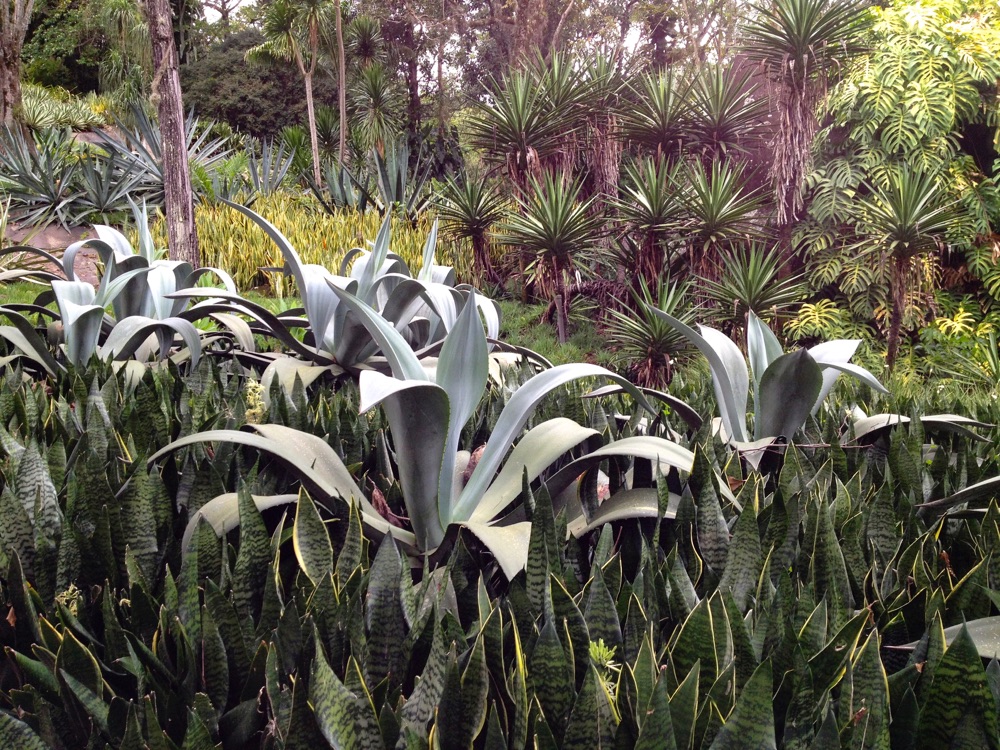
This may sound a little dry, but our trip was anything but dull. The city of Uppsala, the fourth largest in Sweden, is very pretty and the university garden is outstanding, a rival to the best – Oxford, Kew, Edinburgh and others. The Uppsala garden was well looked after with exciting examples of a dry gravel garden and it also has a few plants originally acquired by Linnaeus himself 300 years ago. 

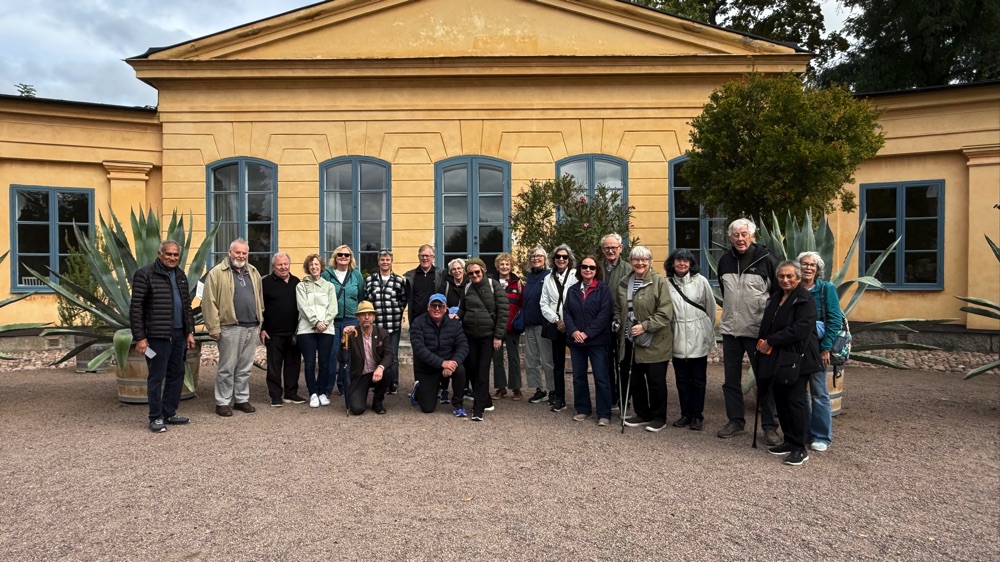
At the Linnaeus Garden in Uppsala

We loved walking the gardens and seeing the vast diversity of plants and then we popped into the original Linnaeus garden in the town centre where we were treated to a tour of the house where he lived and is now a museum. It still contains a lot of his original furnishings as well as the rooms in which he used to give lectures. 

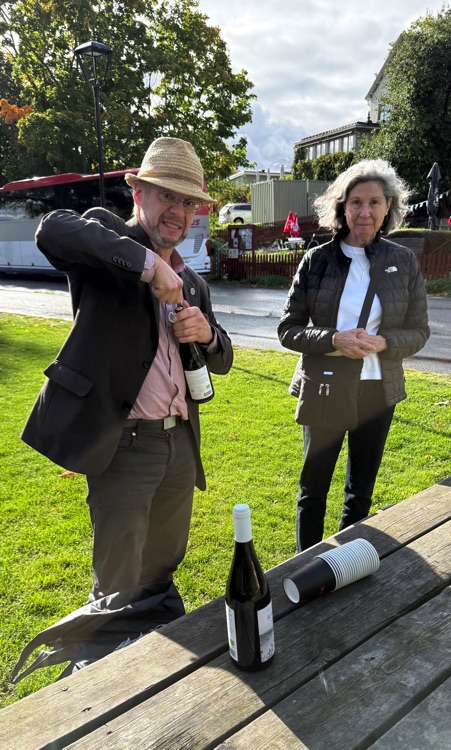
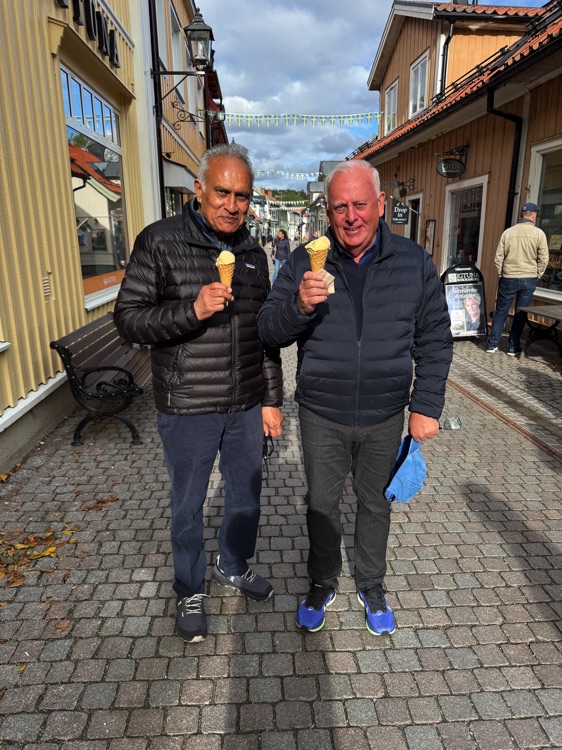
On the way back to Stockholm, we made one last stop at the cute little town of Sigtuna, where Per, our guide, opened  a few bottles of wine as a surprise treat and we had a little party before walking the town’s beautiful main street where some of us enjoyed ice cream and coffee.

Per, our guide, opens some wine for a spontaneous end-of-tour celebration

Everyone returned home from the Handy Dandy Scandi tour satisfied with the fun they had travelling together and the discoveries they made.

Most of us had never been to Scandinavia before and were thrilled to find out what lovely cities Copenhagen, Oslo and Stockholm are, although my favourite will always be Copenhagen followed very closely by Stockholm.

We were also perpetually impressed by the language skills of all the people we encountered – the ease and confidence they showed slipping quickly into speaking perfect English was awesome.

We also delighted in the Scandinavian attitudes to education – all of their universities are free and education is not only paid for but in many cases students are actually paid to attend.

Per, our Swedish guide, who was terrific from start to finish

We loved the courtesy and respect everyone showed us. Canadians are very popular at the moment and we were told more than once how much our prime minister is admired and respected. The Scandinavians are also thrilled that Canada may soon have close ties with them through the European Union. 

Last word: Our guide, Per, was exceptional. Kind, funny, professional and always willing to go the extra mile to make sure our needs were met and our adventure was  safe and enjoyable. We thanked him profusely when we left and we thanked him again here for his tireless effort and the very good natured way he directed us and watched over us from start to finish. Thanks again, Per.

So long, happy travels. The farewell dinner goodbyes.
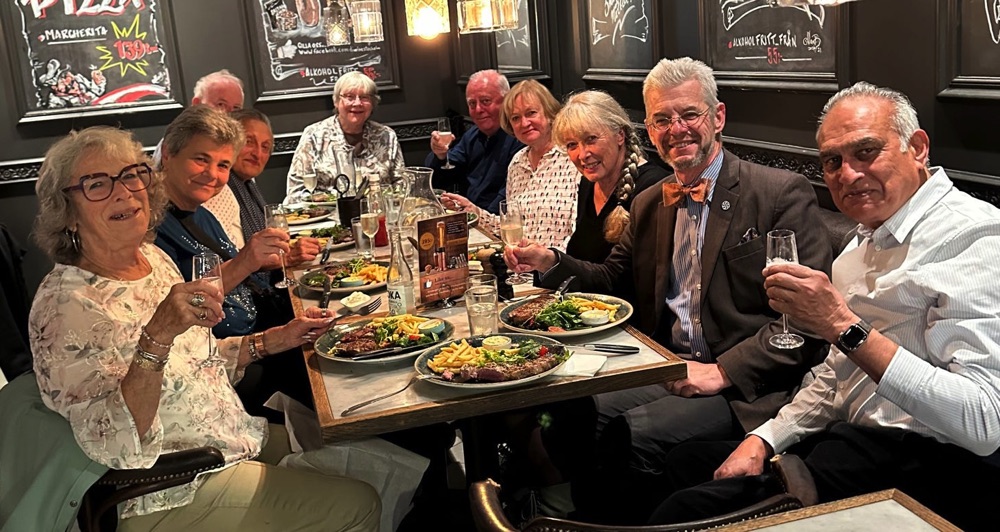
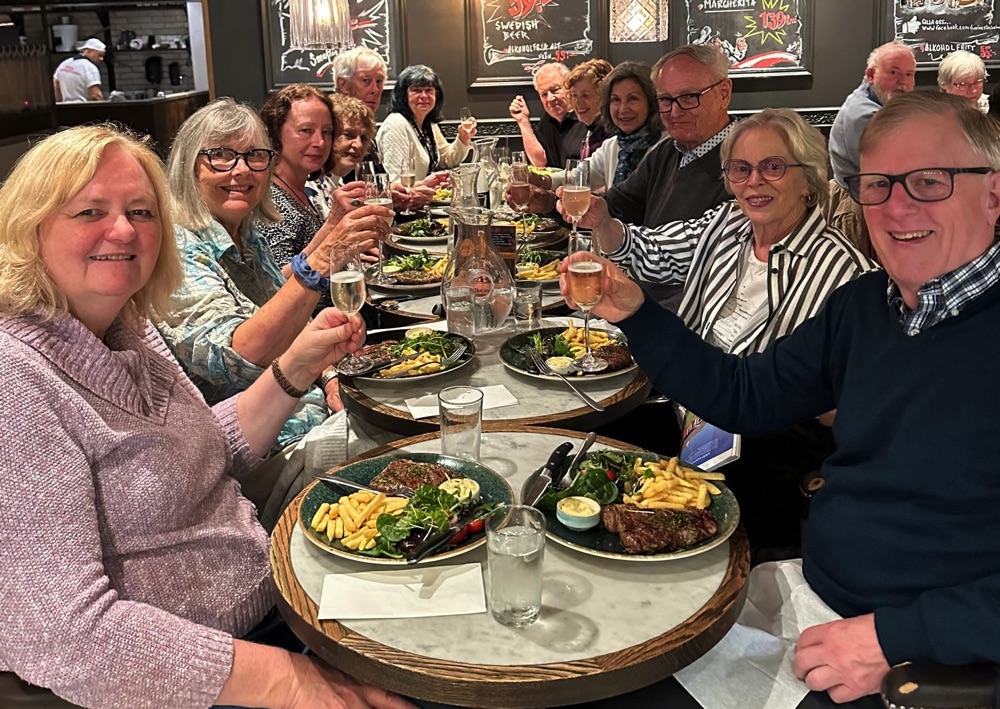
Farewell dinner. Cheers for a good time.
Singing in the rain in Bergen
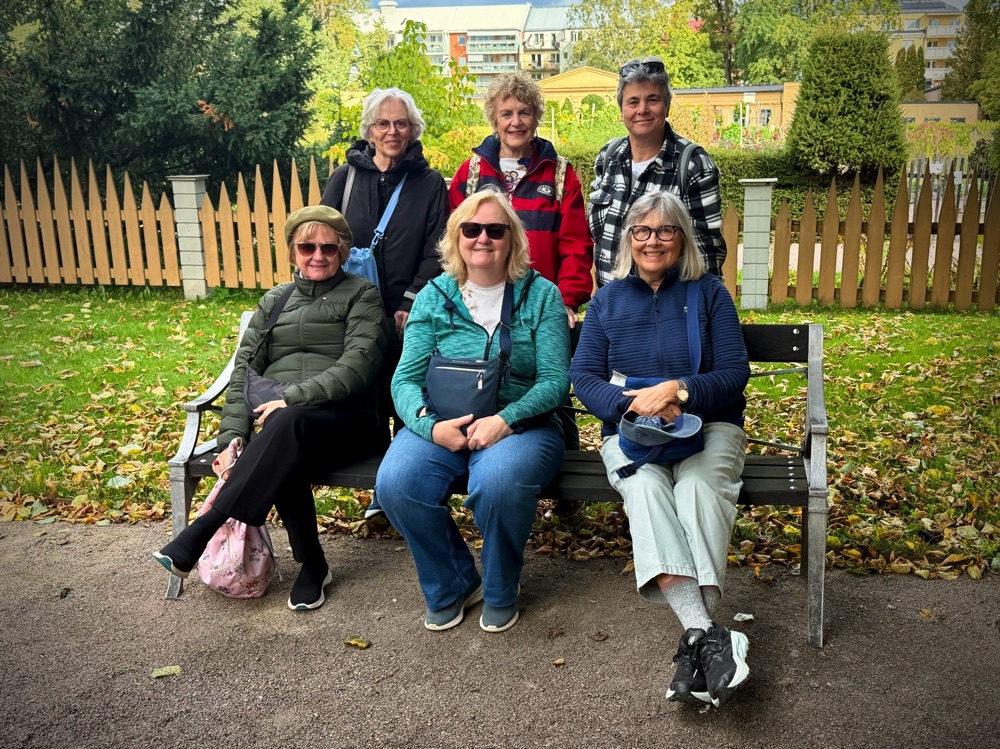
Happy together in The Linnaeus Garden in Uppsala
Night lights at Tivoli
Pause for ice cream in Sigtuna
With terracotta solider in the Hvitsten garden
Buying the best liquorice in the world in Norway.
With the Little Mermaid in Copenhagen
Checking out the Lego store in Copenhagen.

LEAVE A REPLY

Please enter your comment!
Please enter your name here